
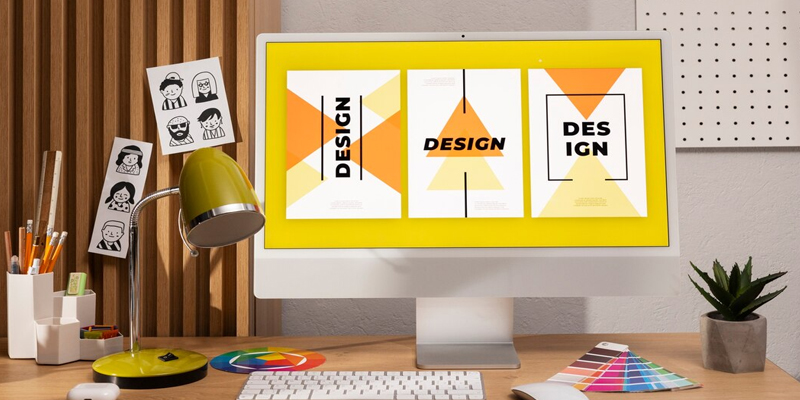
Alignment in Design: The Strategic Framework Behind Visual Clarity and Brand Authority
In every high-performing system—whether digital products, corporate strategy decks, or global brand identities—there is an invisible discipline that separates chaos from clarity. It is not color. It is not typography alone. It is alignment.
In The Highway to Developing Powerful Brands, alignment is described as the silent architecture of order. It is the underlying logic that ensures every visual element has a defined relationship with another. Without it, even the most beautiful design collapses into confusion. With it, even the simplest layout communicates authority, precision, and intent.
To understand alignment, imagine stepping into a corporate headquarters where every department operates independently without coordination. Messages conflict, workflows overlap, and priorities blur. Now imagine the same organization with a unified operating system—clear reporting lines, structured communication flow, and synchronized execution. Alignment in design functions exactly the same way. It is organizational discipline translated into visual language.
The journey of understanding alignment often begins with discomfort. A young designer may place elements freely across a canvas, guided by intuition rather than structure. At first, the result may feel expressive. But as complexity increases, inconsistency emerges. Visual tension builds—not the good kind that creates interest, but the disruptive kind that reduces comprehension.
A mentor once reframed this challenge with a simple principle: “Design is not what you place. It is where you decide to anchor it.”
That anchor is alignment.
Alignment determines how elements relate spatially. It defines whether a brand feels structured or scattered, intentional or improvised. Every margin, edge, and grid line contributes to a larger narrative of order. When alignment is consistent, the brain processes information effortlessly. When it is inconsistent, cognitive load increases, and attention begins to fracture.
This is why alignment is not merely a visual preference—it is a cognitive performance tool.
In branding systems, alignment functions as a trust signal. Audiences may not consciously analyze alignment, but they feel its presence. A well-aligned interface feels stable and professional. A misaligned layout feels unreliable, even if the content itself is strong. This perception happens in milliseconds, long before rational evaluation begins.
The Highway to Developing Powerful Brands emphasizes alignment as a “credibility multiplier.” It argues that brands are not judged solely by what they say, but by how structurally disciplined their communication appears. Alignment becomes a proxy for operational excellence. If a brand cannot align its visual system, users subconsciously question its ability to align its thinking, services, or promises.
At a practical level, alignment operates through systems such as grids, baselines, and spatial ratios. These systems are not constraints—they are accelerators. They reduce decision fatigue and allow designers to focus on hierarchy, meaning, and narrative rather than arbitrary positioning.
A grid system, for example, acts as a strategic framework. It ensures that every element occupies a purposeful position within a structured layout. This creates predictability without reducing creativity. In fact, creativity becomes more powerful within constraints because it is directed rather than scattered.
As the young designer in our narrative began to adopt alignment principles, a shift occurred. The canvas that once felt chaotic started to stabilize. Elements no longer floated aimlessly. They began to communicate relationships—between headings and body text, between images and supporting information, between margins and content density.
This relational clarity is the essence of alignment.
Alignment also plays a critical role in guiding attention. Human vision naturally follows patterns. When elements are aligned, the eye moves in predictable pathways, creating a smooth reading experience. When alignment breaks unexpectedly, attention is disrupted. In design strategy, this disruption must be intentional—not accidental. Otherwise, it weakens communication efficiency.
In digital environments, where attention spans are fragmented, alignment becomes even more important. Interfaces compete for milliseconds of user focus. A misaligned button or inconsistent layout can reduce conversion rates, increase bounce rates, and damage user trust. Alignment, therefore, is not just aesthetic—it is commercial performance infrastructure.
In The Highway to Developing Powerful Brands, alignment is linked to what is described as “visual discipline systems.” These systems ensure that every touchpoint—from social media posts to enterprise dashboards—follows a unified structural logic. This consistency creates what is known as brand coherence: the feeling that every interaction belongs to the same ecosystem.
Brand coherence is what transforms scattered visuals into a recognizable identity.
There is also an emotional dimension to alignment that is often overlooked. Structured layouts create psychological calm. They reduce uncertainty and make information feel manageable. In contrast, misaligned compositions create subtle tension and cognitive resistance. This is why financial institutions, healthcare systems, and government platforms prioritize strict alignment rules—they are designing for trust and clarity under high-stakes conditions.
Creative industries, on the other hand, may deliberately manipulate alignment to create energy, disruption, or expressive impact. However, even in these contexts, successful design is not random. It is controlled deviation from an established system. Without a foundational alignment structure, even creativity loses direction.
This balance between structure and expression is where alignment becomes strategic rather than mechanical.
As the designer’s understanding deepened, alignment stopped being a tool and became a mindset. Every design decision began with spatial relationships: What connects to what? What leads the eye forward? What deserves structural priority? This shift transformed the design process from decoration into orchestration.
In business terms, this orchestration translates into scalability. When alignment rules are defined, design systems can be replicated across teams, platforms, and geographies without losing consistency. This is why global brands invest heavily in design systems—they are essentially investing in alignment frameworks that scale communication.
Without alignment, scaling design leads to fragmentation. With alignment, scaling strengthens identity.
Eventually, the designer realized that alignment is not about making everything look neat. It is about making meaning legible. It ensures that every visual element has purpose, position, and relationship. It transforms isolated components into a unified system of communication.
When the final design system was presented, stakeholders did not explicitly mention alignment. They described it in different terms: clarity, professionalism, structure, and ease of understanding. But beneath all these interpretations was the same underlying force—alignment working silently in the background.
That is its power.
Alignment does not demand attention. It creates it. It does not speak loudly. It organizes silence. And in modern branding ecosystems where complexity is increasing exponentially, alignment becomes one of the most valuable strategic assets an organization can master.
As highlighted in The Highway to Developing Powerful Brands, brands that master alignment do not just improve design quality—they improve decision quality. Because when information is structured clearly, decisions become faster, more confident, and more accurate.
In conclusion, alignment is the hidden operating system of visual communication. It is the discipline that transforms scattered elements into structured intelligence. It is the framework that converts design from subjective arrangement into strategic architecture.
Organizations that treat alignment as a core capability do more than improve aesthetics—they build clarity at scale. And in a world where clarity is a competitive advantage, alignment becomes not just a design principle, but a business imperative.
Ready to upgrade your brand?
Creat Branding Ltd can help you build brand identity, company profiles, websites, signage, and marketing assets.
Request Consultation