

Smart Software for Modern Business Operations
We develop ERP, CRM, inventory, accounting, HR, logistics, ecommerce, and custom business systems that automate work and improve decision-making.
All Systems
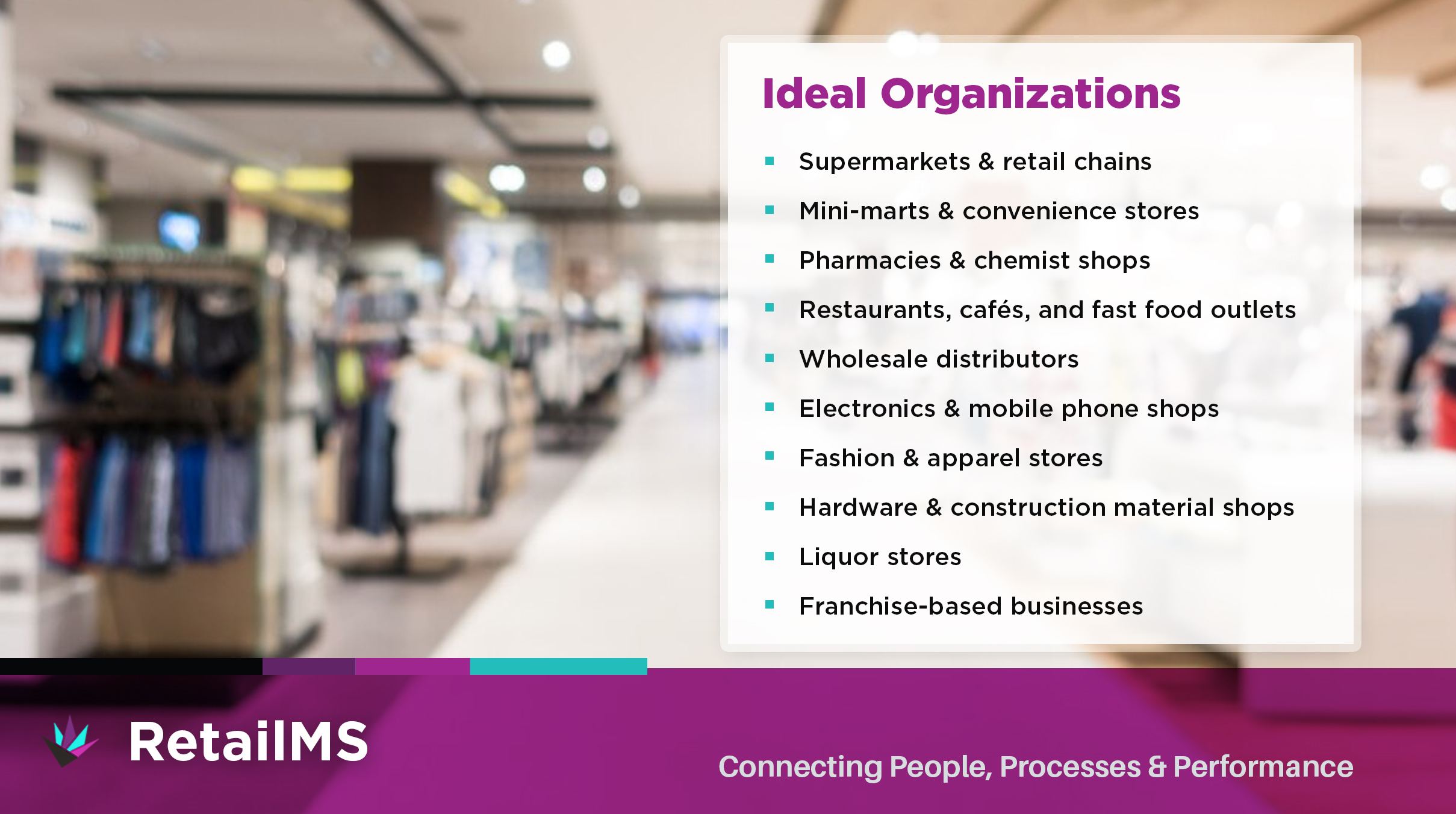
Point of Sale
A modern Point of Sale (POS) system is no longer just a billing tool—it is a real-time retail intelligence and revenue optimization platform. It transforms everyday sales operations into a structured, data-driven ecosystem where businesses can track performance, manage inventory, optimize pricing, and enhance customer experience from a single control point.For organizations in retail, hospitality, pharmacies, supermarkets, and wholesale distribution, a well-implemented POS system becomes the central nervous system of commercial operations.Business Impact of a POS SystemA strategically deployed POS system delivers measurable business transformation across multiple dimensions:Revenue OptimizationAccelerates checkout processes, increasing transaction volumeEnables dynamic pricing and promotional controlReduces revenue leakage through accurate transaction trackingOperational EfficiencyEliminates manual billing errorsAutomates stock deductions in real timeReduces dependency on paper-based recordsInventory IntelligenceReal-time stock visibility across branchesAutomated low-stock alerts and reorder triggersMinimizes overstocking and stockoutsCustomer Experience EnhancementFaster checkout experienceLoyalty programs and customer trackingPersonalized offers based on purchase behaviorBusiness Visibility & ControlReal-time dashboards for sales performanceMulti-branch centralized reportingFraud and discrepancy detectionStrategic Value PropositionA POS system is not just a software product—it is a business transformation asset.It enables organizations to shift from:Reactive management → Predictive decision-makingManual operations → Automated workflowsFragmented data → Unified business intelligenceLocalized control → Centralized multi-branch governanceThis creates a scalable foundation for expansion, especially for businesses planning to open multiple outlets or franchises.

Construction Management System
A Construction Management System is a centralized digital platform engineered to orchestrate end-to-end construction operations—from project initiation to completion—within a unified control environment. It replaces fragmented spreadsheets, manual site reporting, and siloed communication with a real-time operational ecosystem that drives visibility, accountability, and execution efficiency.For modern construction firms, developers, contractors, and engineering consultants, this system becomes a strategic command center for managing cost, time, resources, compliance, and field operations.Strategic Business ImpactA well-implemented Construction Management System transforms how construction enterprises operate:1. Project Delivery AccelerationEliminates delays caused by poor coordination and manual approvalsEnables real-time scheduling and milestone trackingImproves on-time project completion rates2. Cost Control & Profitability OptimizationReduces cost overruns through budget tracking and variance alertsImproves procurement efficiency and supplier pricing transparencyEnhances financial forecasting accuracy3. Operational Visibility & ControlProvides real-time site progress updates from multiple projectsCentralizes communication between site teams, engineers, and managementEnables data-driven decision-making across all project phases4. Risk Reduction & Compliance AssuranceEnsures safety standards and regulatory compliance trackingMaintains audit-ready documentation trailsMinimizes legal and contractual disputes5. Resource OptimizationEfficient allocation of labor, equipment, and materialsPrevents idle resources and double-booking of assetsEnhances productivity across multiple sitesValue Proposition SummaryA Construction Management System is not just software—it is a digital transformation engine for the construction sector. It shifts operations from reactive management to proactive control, enabling organizations to:Deliver projects fasterReduce financial leakageImprove transparency and accountabilityStrengthen stakeholder trustScale operations across multiple sites efficientlyPositioning Statement for Sales & MarketingThis solution positions your organization as a digitally enabled construction enterprise, capable of delivering infrastructure projects with enterprise-level precision, transparency, and operational intelligence.It is the foundation for building smart construction ecosystems that align people, processes, and performance into one unified system of execution excellence.

Insurance Management System
A modern Insurance Management System is no longer just an administrative tool—it is a strategic business engine. It centralizes policy operations, automates underwriting, accelerates claims processing, and strengthens regulatory compliance while unlocking real-time business intelligence.For insurers, brokers, and underwriting agencies, this system shifts operations from fragmented manual workflows to a unified digital ecosystem designed for scale, speed, and profitability.1. Business Impact Overview1.1 Revenue AccelerationFaster policy issuance reduces sales cycle timeAutomated premium calculations eliminate pricing delaysImproved cross-selling through customer data insights1.2 Operational EfficiencyEliminates manual paperwork and duplicate data entryAutomates underwriting and approval workflowsReduces claim processing time from weeks to days or hours1.3 Risk & Compliance ControlBuilt-in regulatory compliance trackingAudit trails for every transactionFraud detection through analytics and anomaly tracking1.4 Customer Experience EnhancementSelf-service customer portalsInstant policy issuance and renewal notificationsTransparent claims tracking in real time1.5 Data-Driven Decision MakingAdvanced reporting dashboardsPredictive analytics for risk profilingPortfolio performance monitoringStrategic Value PropositionFrom a business transformation perspective, this system positions an organization to:Transition from manual operations to a fully digital insurance ecosystemScale operations without proportional increase in staffingImprove loss ratio management through data intelligenceStrengthen competitive advantage through speed and automationUnlock new revenue streams via bundled insurance products and digital channels

Citizen Service Management System
A Citizen Service Management System is a centralized digital platform designed to streamline how government institutions, counties, municipalities, and public agencies engage with citizens. It replaces fragmented manual processes with a unified, data-driven service delivery ecosystem that improves responsiveness, transparency, and accountability.This system acts as a digital service backbone for public institutions, enabling citizens to request services, report issues, track progress, and receive real-time updates through multiple channels (web, mobile, SMS, and self-service kiosks).Strategic Impact on Organizations1. Service Delivery TransformationThe system significantly reduces turnaround time for citizen requests by automating workflows and eliminating paper-based approvals. This leads to faster issue resolution and improved public satisfaction.2. Operational Efficiency OptimizationDepartments become interconnected through a centralized workflow engine, reducing duplication of effort and improving inter-agency coordination.3. Transparency & Accountability EnhancementEvery request is tracked from submission to resolution, creating a transparent audit trail that minimizes corruption risks and increases institutional trust.4. Data-Driven GovernanceReal-time dashboards and analytics empower leadership teams to make informed decisions based on service demand patterns, geographic hotspots, and performance metrics.5. Citizen Engagement AccelerationOmnichannel access ensures citizens can interact with government services anytime, anywhere—improving accessibility and inclusivity.Business Value PropositionFor institutions, this system delivers:Up to 60% reduction in service processing timeSignificant cost savings through digitizationImproved citizen trust and satisfaction indicesEnhanced compliance with governance standardsScalable digital infrastructure for future expansion

Donor Management System
Strategic OverviewA Donor Management System is a centralized digital platform designed to help NGOs, foundations, charities, faith-based organizations, and development agencies efficiently manage donors, contributions, fundraising campaigns, and impact reporting.It replaces fragmented spreadsheets, manual tracking, and disconnected communication channels with a unified, data-driven ecosystem that enhances transparency, accountability, and fundraising performance.In today’s competitive funding environment, organizations that leverage intelligent donor systems consistently outperform those relying on manual processes by improving donor retention, trust, and reporting accuracy.Business ImpactA modern Donor Management System transforms how organizations engage with funding stakeholders:Increased Donor Retention: Automated engagement workflows ensure donors are consistently updated, appreciated, and re-engaged—significantly improving repeat contributions.Improved Transparency & Trust: Real-time reporting and audit-ready records build credibility with international donors, grant agencies, and partners.Enhanced Fundraising Efficiency: Campaign tracking and analytics enable organizations to identify high-performing fundraising channels and optimize resource allocation.Data-Driven Decision Making: Leadership teams gain actionable insights into donor behavior, funding trends, and project performance.Operational Efficiency: Automation reduces manual administrative workload, freeing teams to focus on mission-driven activities rather than paperwork.Strategic Value PropositionFor organizations operating in donor-dependent environments, this system becomes a fundraising intelligence engine rather than just a database.It enables:Predictable fundraising pipelinesStronger donor relationshipsInstitutional credibility with global partnersScalable donation operations across regions
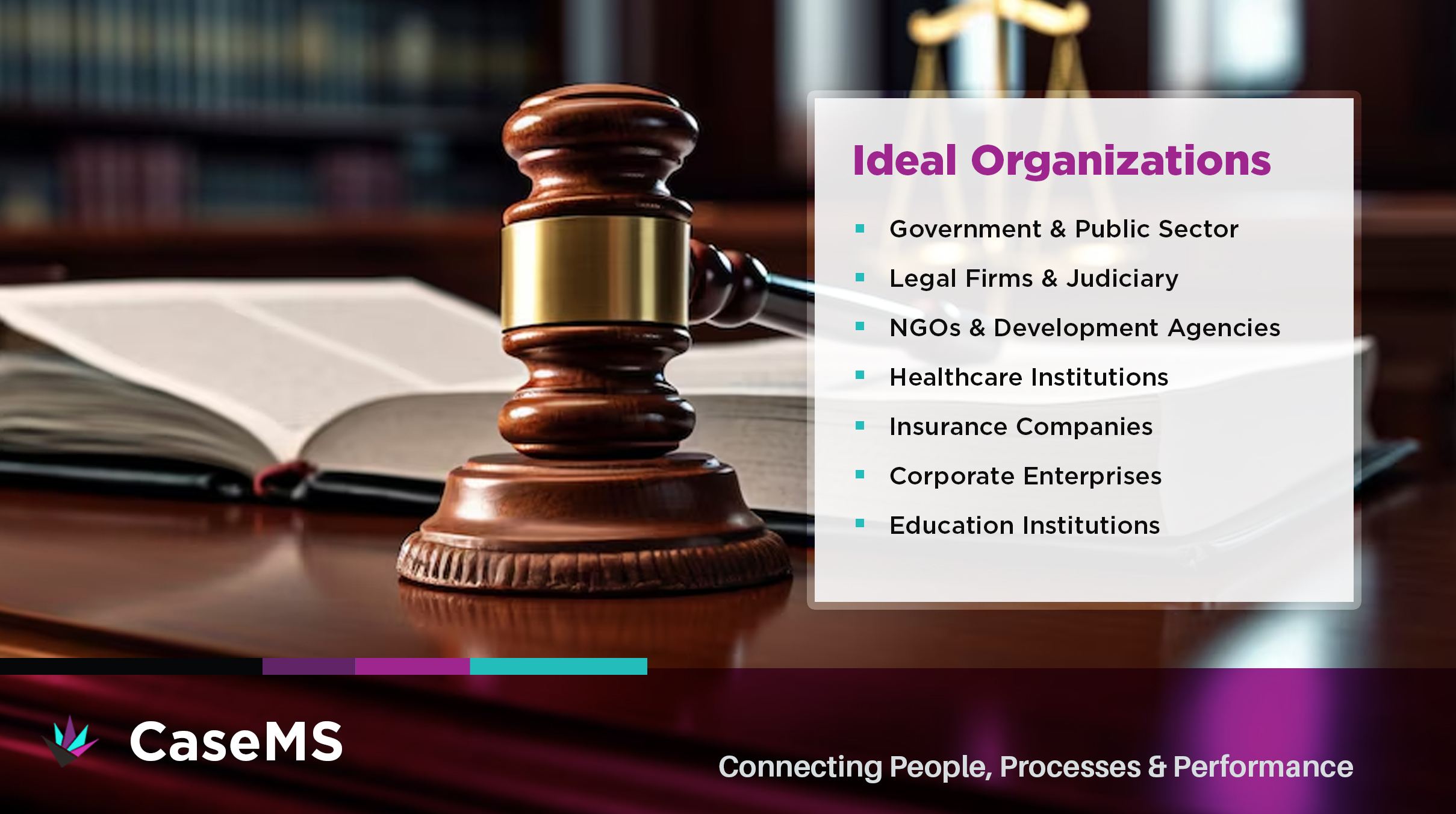
Case Management System
Strategic OverviewThe Case Management System is a centralized digital operations platform designed to streamline how organizations capture, track, process, resolve, and report on cases, incidents, requests, or legal matters. It replaces fragmented spreadsheets, manual follow-ups, email chains, and paper-based workflows with a unified, intelligent workflow engine.This system is engineered for organizations that deal with high volumes of cases requiring accountability, traceability, and structured resolution cycles.Business Impact (Value Proposition)A well-implemented Case Management System transforms operational efficiency across the enterprise:Operational Efficiency Acceleration: Automates case intake, assignment, escalation, and closure—reducing manual workload by up to 60–80%.Full Process Visibility: Enables real-time tracking of every case from initiation to resolution, improving transparency and accountability.Faster Resolution Cycles: Intelligent routing and escalation rules ensure cases reach the right personnel instantly, reducing turnaround time significantly.Compliance & Audit Readiness: Every action is logged, time-stamped, and traceable—supporting regulatory compliance and internal audits.Improved Customer/Citizen Satisfaction: Faster response times and structured communication channels improve service delivery experience.Data-Driven Decision Making: Advanced analytics provide insights into case trends, bottlenecks, staff performance, and service gaps.Optional Advanced Enhancements (Upsell Opportunities)Chatbot-based case intake systemMobile field agent applicationPredictive analytics for case resolution timesAPI integrations with government portals or CRM systemsDigital signature and approval workflows

Farm Management System
A Farm Management System is a digital backbone for modern agriculture operations. It consolidates farm planning, operations, monitoring, finance, inventory, and reporting into one intelligent platform. The goal is simple: transform farming from reactive decision-making to data-driven agribusiness execution.For agribusinesses, cooperatives, large-scale farms, and agricultural enterprises, this system unlocks operational clarity, cost efficiency, and productivity scaling.Strategic Business ImpactA well-implemented Farm Management System delivers measurable transformation across the agricultural value chain:Operational Efficiency: Eliminates manual record-keeping and fragmented farm data by centralizing all farm operations into a unified platform.Increased Yield & Productivity: Enables precision farming decisions based on crop cycles, soil data, weather patterns, and resource usage tracking.Cost Optimization: Reduces waste in fertilizer, feed, labor, irrigation, and logistics through real-time tracking and predictive planning.Financial Visibility: Provides full agribusiness accounting integration—cost per acre, profit per crop, ROI per season.Supply Chain Control: Improves traceability from production to market, strengthening compliance and buyer trust.Risk Reduction: Early warning systems for pests, disease outbreaks, weather risks, and livestock health issuesValue Proposition SummaryThis is not just software—it is a digital transformation engine for agriculture enterprises. It converts fragmented farm operations into a structured, scalable, and data-driven agribusiness ecosystem.Organizations gain:Higher productivity per acreLower operational wasteBetter financial controlStronger market positioningData-backed decision-making capability
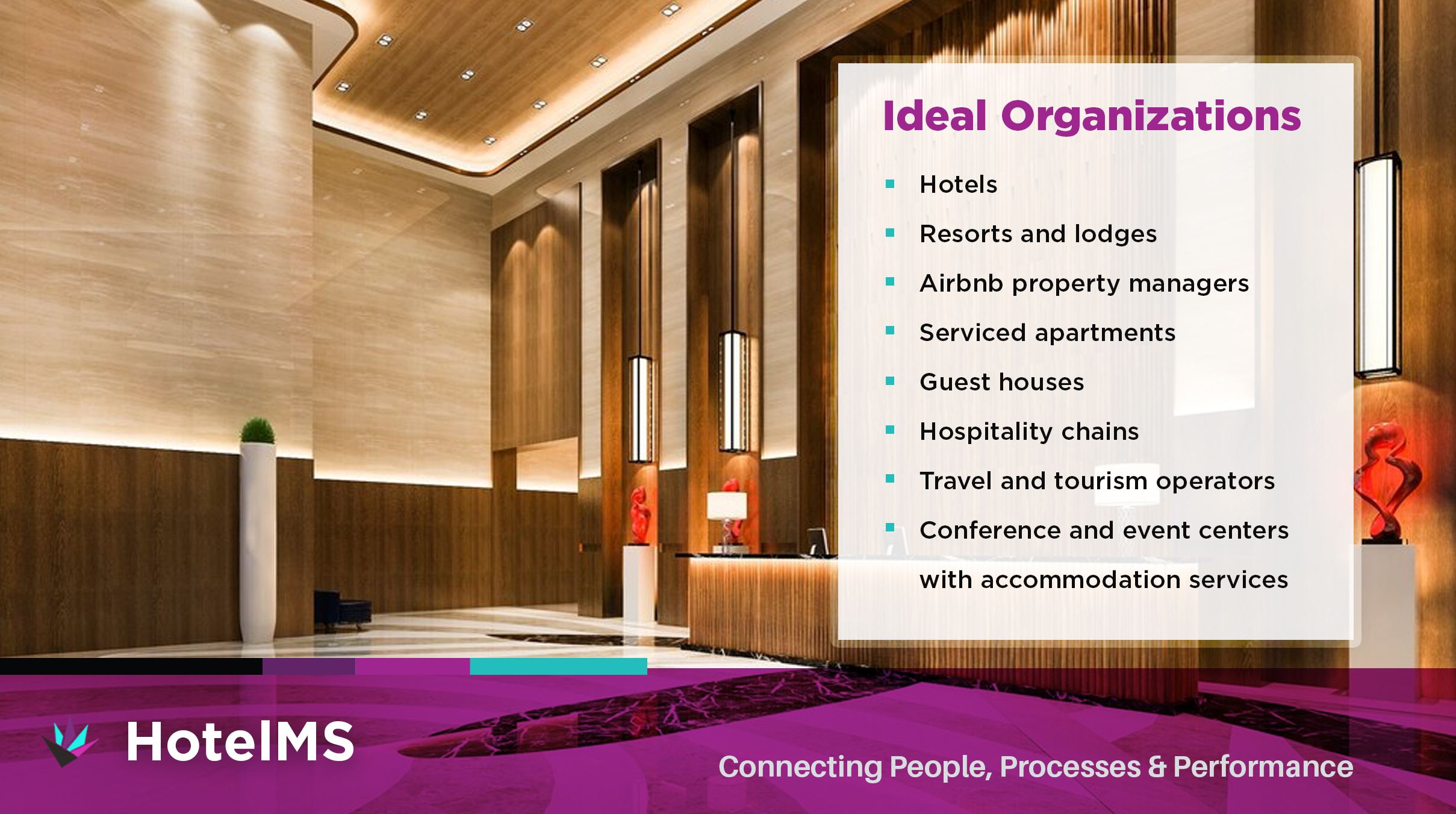
Hotel Management System
Hotel Management System (HMS)A Hotel Management System is a centralized digital platform designed to automate and optimize all core hotel operations—from reservations and front desk management to billing, housekeeping, and guest experience. It transforms traditional hospitality operations into a data-driven, revenue-optimized ecosystem.For modern hospitality businesses, this is no longer a “nice-to-have” system—it is a competitive infrastructure layer that directly impacts occupancy rates, operational efficiency, and guest satisfaction.Business ImpactA well-implemented Hotel Management System delivers measurable business transformation across key performance indicators:1. Revenue OptimizationMaximizes room occupancy through real-time availability trackingEnables dynamic pricing strategies based on demandReduces revenue leakage from manual billing errors2. Operational EfficiencyAutomates front desk operations, reducing manual workloadStreamlines housekeeping coordination and room readiness trackingCentralizes all hotel operations into a single dashboard3. Enhanced Guest ExperienceFaster check-in/check-out processesPersonalized guest profiles and preferencesSeamless booking and communication channels4. Data-Driven Decision MakingReal-time occupancy and revenue reportsGuest behavior analyticsPerformance tracking across departments5. Cost ReductionMinimizes administrative overheadReduces dependency on manual paperworkImproves resource allocation (staff, rooms, inventory)Strategic Value PropositionFrom a business growth perspective, this system positions hospitality operators to:Scale operations without increasing administrative burdenCompete effectively with global booking platformsImprove occupancy consistency throughout seasonal fluctuationsBuild long-term guest loyalty through personalized experiencesTransition into a fully digital hospitality enterprise

Property Management System
A Property Management System is a centralized digital platform that enables real estate companies, property developers, facility managers, and landlords to efficiently manage properties, tenants, leases, maintenance, payments, and reporting in real time.It replaces fragmented spreadsheets, manual rent tracking, paper-based contracts, and reactive maintenance workflows with a unified, automated, and data-driven ecosystem.This is not just software—it is an operational control hub for modern real estate management.Business Impact (Why It Matters)A well-implemented PMS transforms property operations across five key dimensions:Revenue OptimizationEliminates rent leakage through automated billing and remindersImproves occupancy rates via better tenant managementEnables dynamic rent tracking and escalation controlOperational EfficiencyReduces manual administrative workload by up to 60–80%Automates lease tracking, invoicing, and maintenance requestsCentralizes all property data in one systemTenant Experience EnhancementProvides tenants with self-service portalsFaster response to maintenance requestsTransparent billing and communication channelsCompliance & Risk ControlDigital lease agreements and audit trailsAutomated reminders for renewals and expiriesSecure document storage and access controlData-Driven Decision MakingReal-time dashboards for occupancy, revenue, and expensesPerformance analytics per property or portfolioPredictive insights for planning and investmentThis system enables organizations to:Increase rental revenue collection efficiencyReduce operational overheadImprove tenant retentionGain real-time visibility into portfolio performanceScale property operations without increasing headcount

SACCO Management System
SACCO Management SystemA SACCO Management System is a centralized financial and operational platform designed to digitize, automate, and optimize Savings and Credit Cooperative Organizations. It replaces manual processes, fragmented spreadsheets, and legacy systems with a unified ecosystem that improves financial visibility, member trust, regulatory compliance, and operational efficiency.For modern SACCOs competing in a digital-first financial environment, this system is not just software—it is a growth and governance engine.Strategic Impact on SACCO OperationsImplementing a SACCO Management System delivers measurable transformation across the entire value chain:1. Financial Control & TransparencyReal-time visibility of member savings, loans, and cash flowEliminates reconciliation delays and human errorStrengthens audit readiness and regulatory compliance2. Revenue Growth AccelerationFaster loan processing increases lending volumeAutomated interest calculations improve accuracy of earningsDigital onboarding expands member acquisition capacity3. Operational EfficiencyReduces manual workload by up to 70–90%Streamlines loan approval workflowsAutomates member statements, receipts, and reporting4. Member Experience TransformationSelf-service access improves engagement and trustMobile and web access enhances convenienceInstant notifications improve communication speed5. Risk & Governance StrengtheningBuilt-in approval hierarchies reduce fraud riskAutomated credit scoring reduces default exposureFull audit trail ensures accountabilityBusiness Value PropositionPositioned correctly, this system becomes a financial infrastructure upgrade, not just software.It enables SACCOs to:Scale membership without operational bottlenecksImprove loan recovery rates through automationBuild member trust through transparencyReduce operational costs significantlyStrengthen compliance and audit readinessTransition from manual SACCOs to digital financial institutions
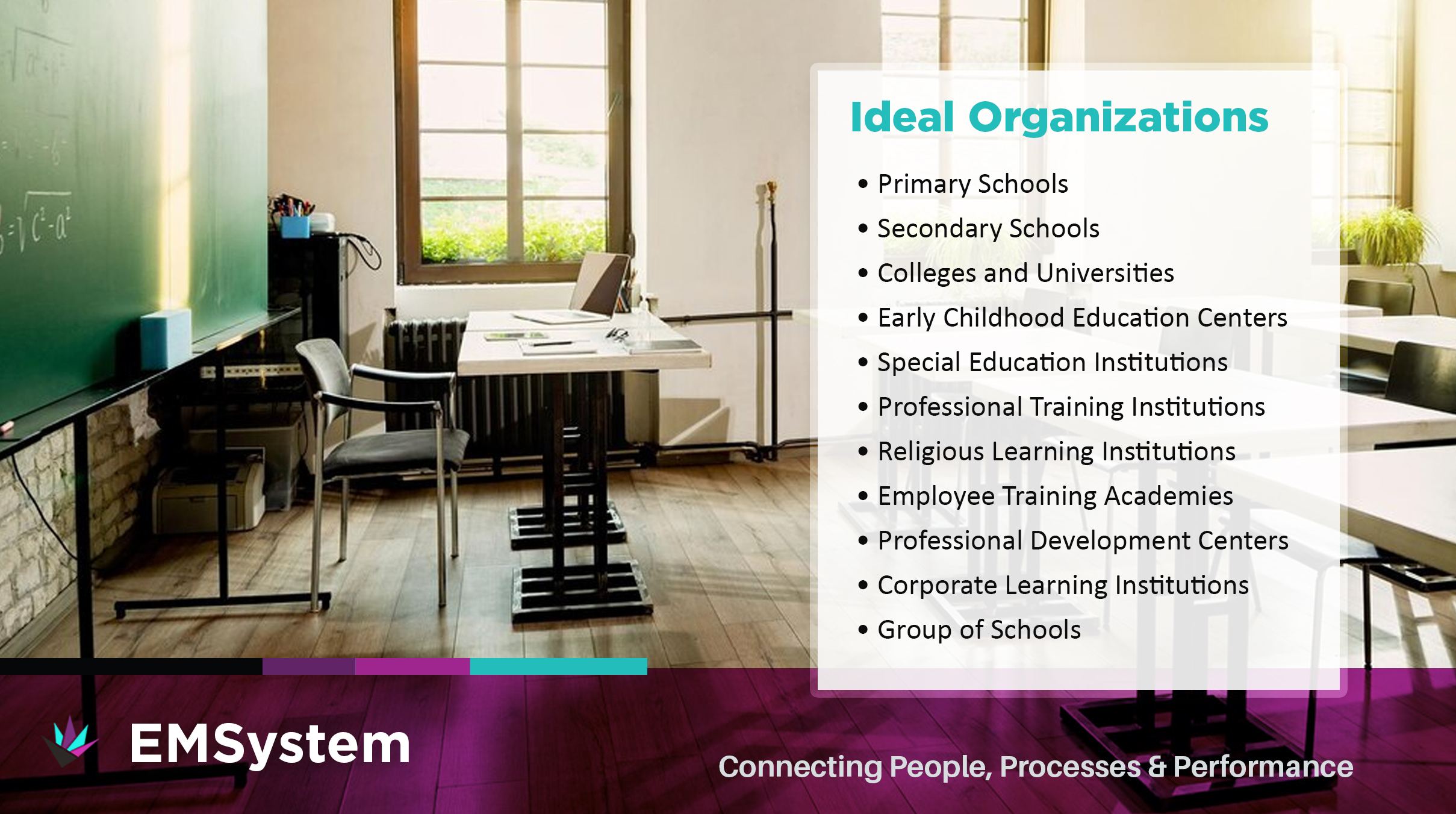
School Management System
Transforming Educational Institutions Through Digital InnovationA School Management System is a comprehensive digital platform designed to automate, streamline, and centralize the management of schools, colleges, universities, training institutions, and learning centers. The system connects administrators, teachers, students, parents, and finance departments into one integrated platform, enabling efficient management of academic and administrative operations.Business Impact and BenefitsEducational institutions face numerous challenges including manual record keeping, delayed communication, fee collection difficulties, examination management complexities, and lack of real-time reporting. Our School Management System addresses these challenges by digitizing operations and providing a modern, efficient, and scalable solution.Key BenefitsEnhanced Student Performance Tracking: Provides real-time monitoring of student academic progress, attendance, discipline, and overall performance.Streamlined Fee Collection: Automates invoicing, payment tracking, fee reminders, and financial reporting, improving revenue collection.Better Parent Engagement: Parents can access student performance reports, attendance records, fee statements, school announcements, and communication portals from anywhere.Data-Driven Decision Making: Comprehensive dashboards and reports enable management to make informed decisions based on accurate data.Reduced Administrative Costs: Eliminates redundant processes, reducing operational expenses and increasing productivity.Improved Communication; Facilitates seamless communication between school administration, teachers, parents, and students.Scalability: Supports institutions of all sizes, from small schools to multi-campus educational organizations.Improved Operational Efficiency: Automates routine administrative tasks, reducing paperwork and minimizing manual errors.Why Schools Choose Our SolutionOur School Management System is designed to improve educational excellence while simplifying administration. By automating processes, enhancing transparency, improving communication, and providing actionable insights, schools can focus more on delivering quality education and less on administrative burdens.Whether you operate a primary school, secondary school, college, university, vocational training center, or multi-campus institution, our School Management System provides the digital foundation needed for sustainable growth, operational efficiency, and exceptional educational outcomes.
Hospital Management System
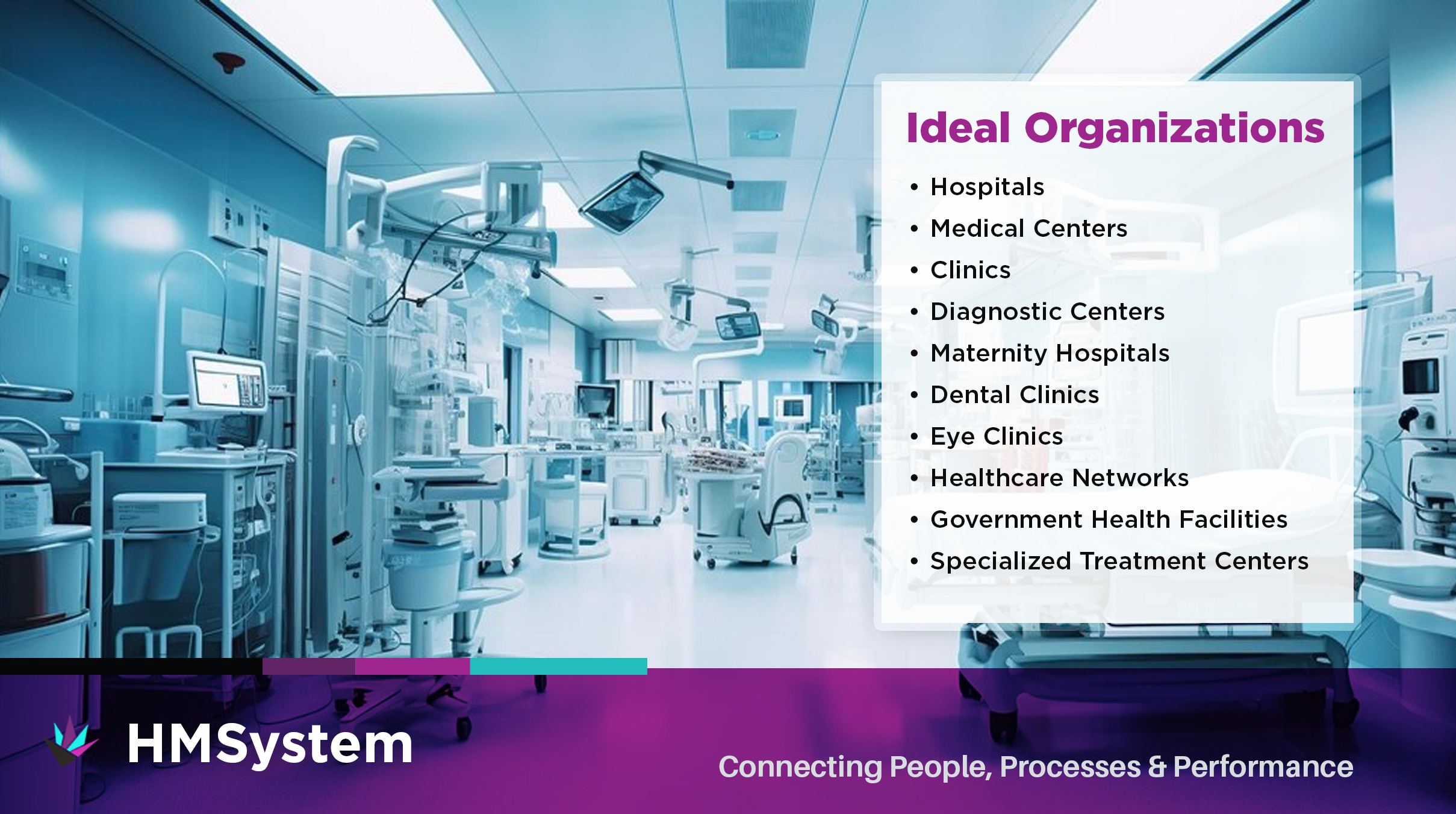
A Hospital Management System (HMS) is a comprehensive software platform designed to automate, streamline, and manage all hospital operations from a centralized system. It connects patients, doctors, nurses, pharmacists, laboratory staff, administrators, and management teams, ensuring seamless coordination across the healthcare facility.As healthcare institutions continue to face increasing patient volumes, regulatory requirements, and operational complexities, a modern Hospital Management System provides the digital foundation needed to deliver efficient, accurate, and patient-centered healthcare services.Business Impact and BenefitsIncreased Operational Efficiency:Automates routine administrative tasks such as patient registration, appointment scheduling, billing, and reporting, allowing healthcare professionals to focus more on patient care.Reduced Medical Errors: Electronic records minimize paperwork errors, duplicate entries, prescription mistakes, and data inconsistencies, improving overall healthcare quality.Faster Decision-Making: Real-time dashboards and analytics provide hospital management with critical insights into operations, finances, resource utilization, and patient trends.Enhanced Revenue Management: Accurate billing, insurance processing, and payment tracking help reduce revenue leakages and improve financial performance.Regulatory Compliance: Ensures secure storage of patient records while supporting healthcare regulations, data privacy requirements, and audit readiness.Better Resource Utilization: Helps optimize the use of hospital beds, medical equipment, staff schedules, and facility resources.Improved Patient Satisfaction: Patients experience shorter waiting times, faster service delivery, improved communication, and more convenient appointment management.Improved Patient Care:The system enables healthcare providers to access patient information instantly, reducing delays and ensuring better diagnosis, treatment, and follow-up care.
Enterprise Resource Planning (ERP) System
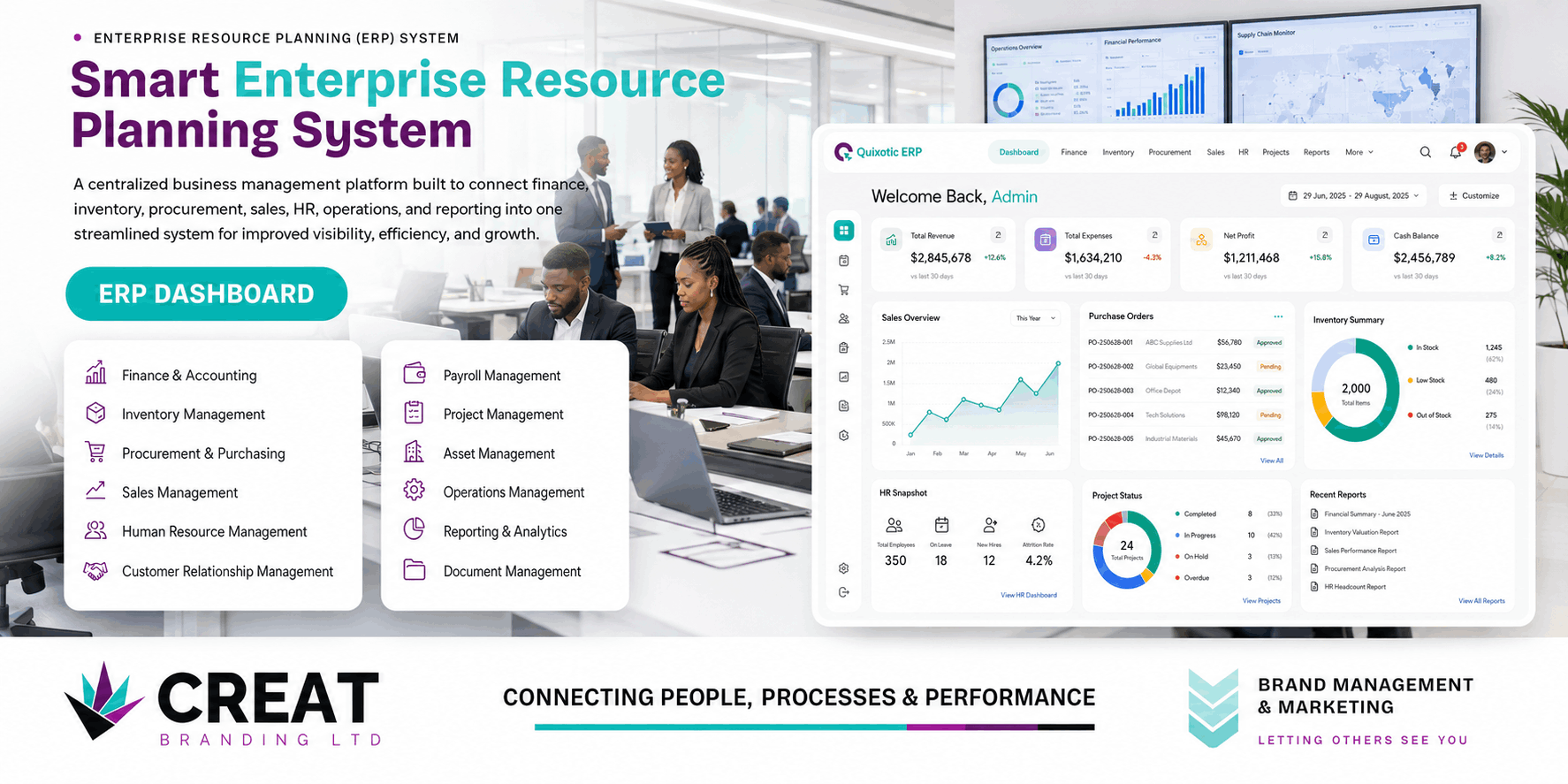
End-to-end financial operations covering transactions, reporting, budgeting, and compliance workflowsSales lifecycle management from quotation generation through to invoicing and payment collectionInventory control with real-time stock visibility, warehouse coordination, and stock movement trackingProcurement workflows including requisitions, approvals, supplier coordination, and purchasing controlProduction planning and manufacturing execution for efficient resource and output managementSupply chain and logistics coordination covering dispatch, delivery tracking, and distribution flowCustomer relationship management across lead capture, engagement, and retention cyclesProject planning and delivery tracking with milestones, budgets, and task execution visibilityHuman resource management including employee records, attendance, and performance trackingPayroll automation with statutory deductions, salary processing, and compliance handlingBusiness intelligence and reporting dashboards for performance monitoring and decision supportCentralized user governance with role-based access control, approvals, and audit oversightBusiness ImpactEnhanced operational efficiency through integrated and automated business workflowsImproved financial control, visibility, and accuracy in reporting and decision-makingAccelerated revenue cycles driven by streamlined sales and payment processesOptimized inventory utilization with reduced stock shortages and overstock risksStrengthened procurement governance and cost control mechanismsImproved production efficiency and reduced operational waste in manufacturing processesFaster and more reliable logistics and supply chain executionStronger customer engagement and retention through structured CRM processesIncreased workforce productivity through streamlined HR and payroll systemsData-driven decision-making enabled by real-time analytics and reportingStronger internal controls, compliance adherence, and fraud risk mitigationScalable digital infrastructure supporting long-term organizational growth
Accounting & Finance System
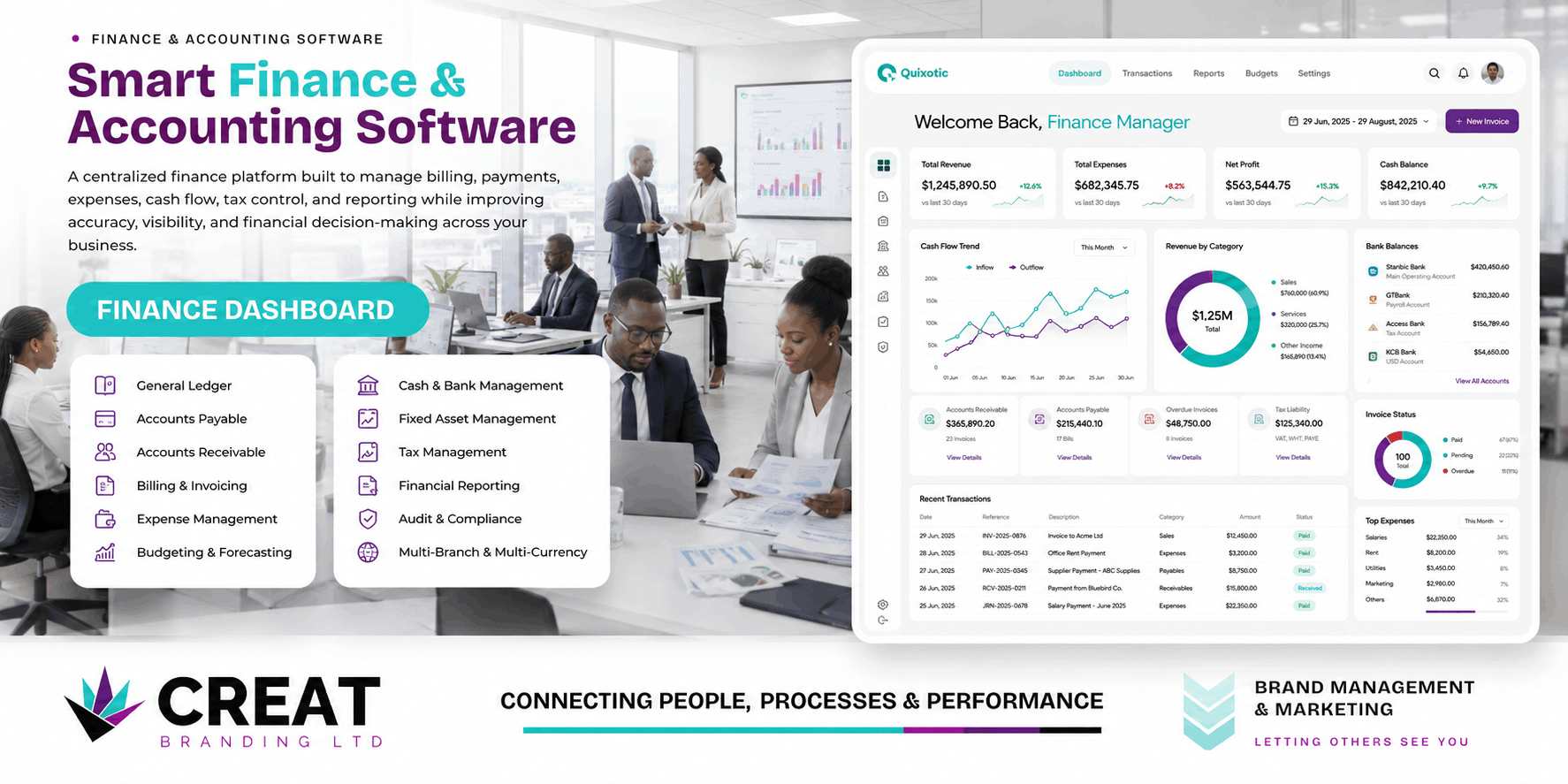
Real-time financial visibility through dashboards, performance summaries, and cash flow insightsCore accounting operations including general ledger, journal entries, and chart of accounts structuringManagement of accounts receivable and payable, including customer balances, supplier obligations, and aging analysisEnd-to-end invoicing, billing, and payment tracking across customers and suppliersBank reconciliation and cashbook management to ensure accurate financial records alignmentExpense tracking, petty cash management, and cost allocation across departments and projectsBudget planning, monitoring, and variance analysis against actual performanceTax computation, reporting, and compliance management including VAT and statutory deductionsProfitability analysis through profit & loss statements, balance sheets, and cash flow reportingFixed asset management including acquisition, depreciation, valuation, and disposal trackingApproval workflows for financial transactions including invoices, expenses, payments, and budgetsAudit trail tracking for full transparency of all financial system activitiesPayroll integration to connect employee costs directly into financial recordsFinancial reporting suite including trial balance, ledgers, statements, and management reportsUser access control with role-based permissions and secure financial governanceSystem configuration settings for financial years, tax rules, numbering, and payment structuresBusiness ImpactStrengthens financial control through centralized and structured accounting operationsImproves cash flow visibility and accelerates decision-making with real-time insightsEnhances revenue collection efficiency and reduces outstanding receivablesOptimizes cost management through structured expense and budget controlsEnsures full tax compliance and reduces financial reporting errorsImproves accuracy of financial statements and audit readinessEnhances operational efficiency by automating manual accounting processesStrengthens internal controls through approval workflows and audit trailsSupports scalability for multi-currency and multi-entity business environmentsImproves strategic planning through accurate forecasting and financial analyticsReduces fraud risk through controlled access and system governanceEnables data-driven financial leadership and long-term business sustainability
Inventory Management System
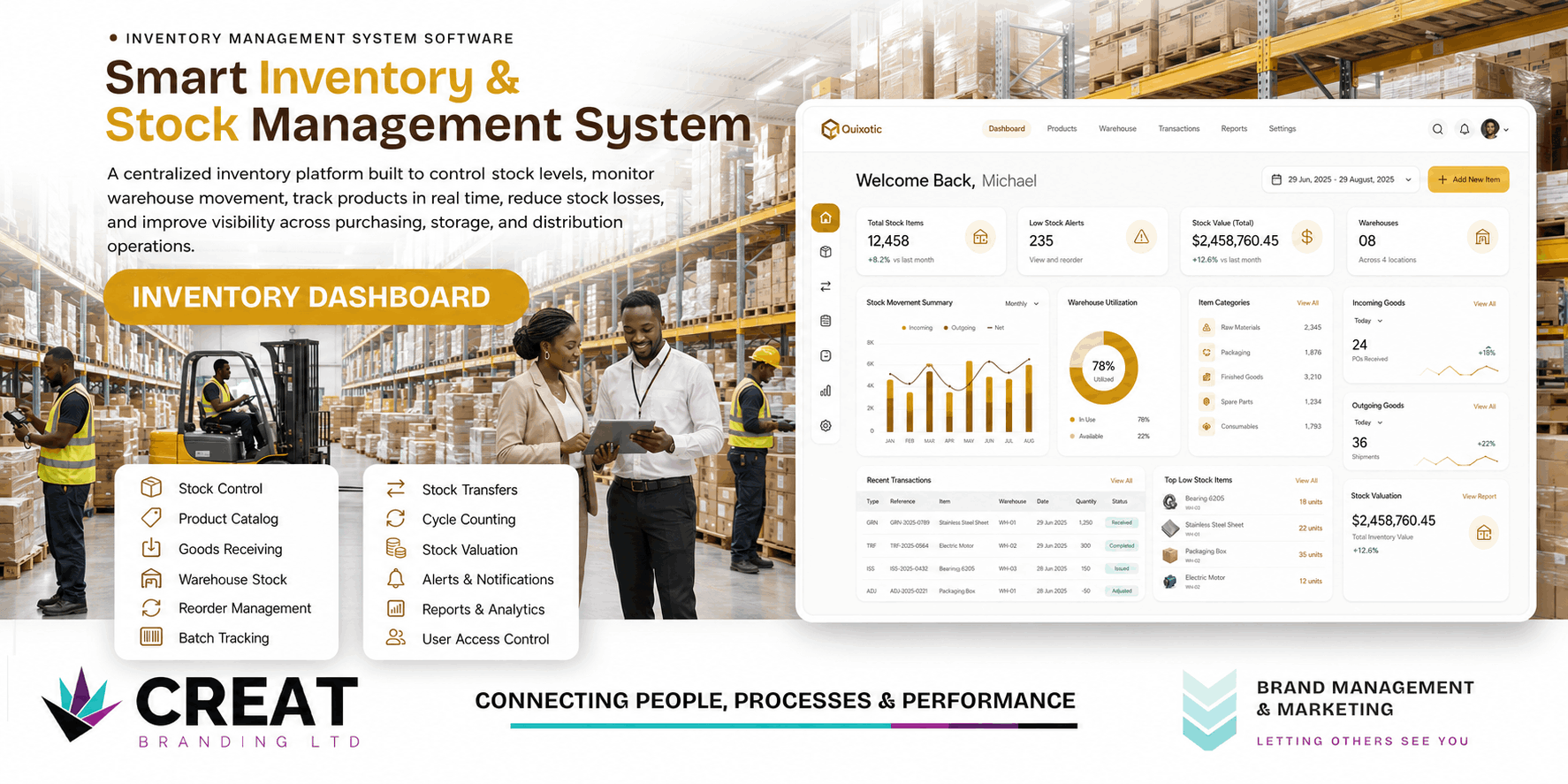
Centralized product and inventory lifecycle management from product setup to final dispatchReal-time stock monitoring across warehouses, branches, and storage locationsStock movement control including receiving, issuing, transfers, adjustments, and returnsWarehouse operations management covering receiving, picking, packing, and dispatch workflowsAutomated reorder management through alerts, thresholds, and supplier-based replenishment logicBatch and serial number tracking for full traceability, quality control, and warranty managementStock valuation and cost tracking using methods such as FIFO, LIFO, and average cost modelsDamage and returns management to capture losses, defects, and customer/supplier returnsInventory counting and reconciliation through stock takes and cycle countsBarcode and QR code integration for fast identification and transaction processingSupplier integration linking products, pricing, lead times, and procurement intelligenceApproval workflows for sensitive inventory actions such as adjustments, transfers, and disposalsComprehensive inventory reporting, analytics, and audit trail visibilityConfigurable system settings for SKU structures, valuation rules, warehouses, and access controlBusiness ImpactImproved stock visibility and control across all locations in real timeReduced stockouts and overstocking through intelligent demand and reorder managementEnhanced operational efficiency in warehousing, issuing, and stock movement processesStronger financial accuracy through precise stock valuation and cost trackingIncreased accountability through full traceability of inventory movements and user actionsReduced losses from damage, theft, and unrecorded stock discrepanciesFaster decision-making enabled by real-time inventory insights and analyticsImproved supplier coordination and procurement efficiency through linked supplier dataHigher customer satisfaction through better product availability and order fulfillmentStrong governance and compliance through approvals and audit trail mechanismsScalable inventory infrastructure capable of supporting multi-branch growth and expansionStreamlined operations through automation of manual stock control processes

CRM - Customer Relationship Management
Centralized customer data management including full customer profiles, contacts, and account historiesMulti-channel lead capture and qualification from web, social media, email, phone, referrals, and campaignsEnd-to-end lead management covering tracking, scoring, nurturing, assignment, and conversion workflowsSales pipeline management from initial inquiry through qualification, negotiation, and deal closureOpportunity tracking with deal value, probability forecasting, and competitor analysisQuotation and proposal management linked directly to customers and sales opportunitiesCustomer communication tracking across calls, emails, WhatsApp, meetings, and internal notesStructured follow-up management through reminders, tasks, and automated alertsCustomer segmentation based on behavior, value, industry, engagement, and purchase historyComplaint and issue management with escalation workflows and resolution trackingCustomer feedback collection and analysis to measure satisfaction and service qualityRetention and churn analysis to monitor repeat business, loyalty, and customer lifetime valueCustomer account and payment tracking including invoices, balances, and credit limitsMarketing campaign management across email, SMS, WhatsApp, and digital channelsTask and activity management for sales and customer service teamsIntegrated customer support ticketing linked directly to CRM recordsCRM reporting and analytics for performance, conversion, and revenue insightsWorkflow automation for lead assignment, follow-ups, reminders, and customer engagementSystem configuration for roles, permissions, pipelines, and CRM structure3. Business ImpactImproved customer visibility across the entire lifecycle from lead to retentionHigher conversion rates through structured lead nurturing and pipeline managementIncreased sales efficiency through better opportunity tracking and follow-up disciplineStronger customer relationships driven by personalized and consistent communicationReduced missed opportunities through automated reminders and activity trackingEnhanced marketing effectiveness with targeted campaigns and measurable ROIFaster issue resolution and improved customer satisfaction through integrated supportIncreased customer retention and repeat sales through structured loyalty trackingBetter revenue forecasting through pipeline analytics and opportunity visibilityImproved team productivity through task automation and workflow organizationStronger financial control through integrated customer account and payment trackingData-driven decision-making supported by real-time CRM analytics and reportingScalable customer management framework adaptable to growing business needs

Procurement & Purchasing System
End-to-end procurement lifecycle from purchase requests through to supplier payment settlementSupplier sourcing and quotation management including RFQs, price submissions, and evaluation workflowsPurchase order creation, approval, dispatch, and tracking across multiple suppliers and departmentsGoods receiving and inspection processes with automated inventory updates and discrepancy handlingMulti-level approval workflows for controlled authorization of purchasing activitiesSupplier management covering profiles, contracts, compliance records, and performance historyInvoice and supplier bill processing aligned to purchase orders and goods received confirmationsPrice comparison and supplier evaluation to support cost-optimized procurement decisionsProcurement planning, forecasting, and budgeting aligned to operational demand and stock requirementsVendor performance tracking based on delivery, quality, responsiveness, and reliability metricsContract lifecycle management including renewals, compliance tracking, and obligation monitoringReturns and claims management for defective, incorrect, or disputed supplier deliveriesCentralized document management for procurement records, contracts, and supporting filesAlerts and notifications for approvals, deliveries, budgets, and contract milestonesConfigurable procurement rules, workflows, and system settings for organizational flexibility3. Business ImpactStrengthens procurement governance through structured approval and authorization controlsReduces unauthorized and off-budget purchasing activities across departmentsImproves cost efficiency through supplier comparison and competitive sourcing strategiesEnhances supplier accountability through measurable performance tracking frameworksIncreases procurement transparency with real-time visibility into requests, orders, and spendingOptimizes cash flow management through controlled invoicing and payment alignmentReduces operational delays through automated workflows and notification systemsImproves inventory accuracy through seamless procurement-to-stock integrationStrengthens financial control through direct linkage between procurement and accounting systemsEnhances contract compliance and reduces risk of missed renewals or obligationsImproves decision-making through procurement analytics, reporting, and spend insightsBuilds scalable procurement operations capable of supporting organizational growth and complexity

Sales Management System
End-to-end sales lifecycle management from lead capture through to payment collection and reconciliationLead qualification, scoring, assignment, follow-up scheduling, and conversion trackingCustomer relationship management with complete profile histories, communication logs, and purchase behavior trackingOpportunity and pipeline management across all deal stages with forecasting and closing probability trackingQuotation, proforma invoice, sales order, and invoicing workflows with structured approval controlsPayment processing, receipt recording, and outstanding balance management across multiple payment channelsDiscounting, promotions, pricing strategy management, and controlled approval-based pricing adjustmentsSales performance tracking including targets, commissions, team productivity, and regional performanceForecasting and revenue prediction based on pipeline, historical trends, and sales activityCustomer engagement workflows including follow-ups, reminders, communications, and activity trackingProduct and service catalog management with structured pricing, categories, and availability trackingReturns, credit notes, and customer dispute handling with full audit and reconciliation trailsReporting and analytics across sales performance, profitability, conversion rates, and team efficiencyTerritory, branch, and sales team management for structured distribution and accountabilitySystem configuration and governance for pricing rules, numbering systems, tax settings, and workflowsBusiness ImpactSignificant improvement in sales visibility through real-time dashboards and pipeline insightsIncreased conversion rates through structured lead management and consistent follow-up processesFaster revenue realization driven by streamlined quotation-to-cash workflowsStronger customer retention through personalized engagement and historical interaction trackingImproved financial control through automated invoicing, payments, and reconciliation processesEnhanced sales team productivity with clear targets, accountability, and performance trackingReduced revenue leakage through controlled discounting and approval-based workflowsMore accurate forecasting enabling proactive inventory, staffing, and cash flow planningStronger governance and reduced operational risk through standardized approval structuresImproved customer experience through faster response times and consistent communication channelsBetter strategic decision-making supported by consolidated sales analytics and reportingScalable sales operations capable of supporting multi-branch, multi-territory business expansion
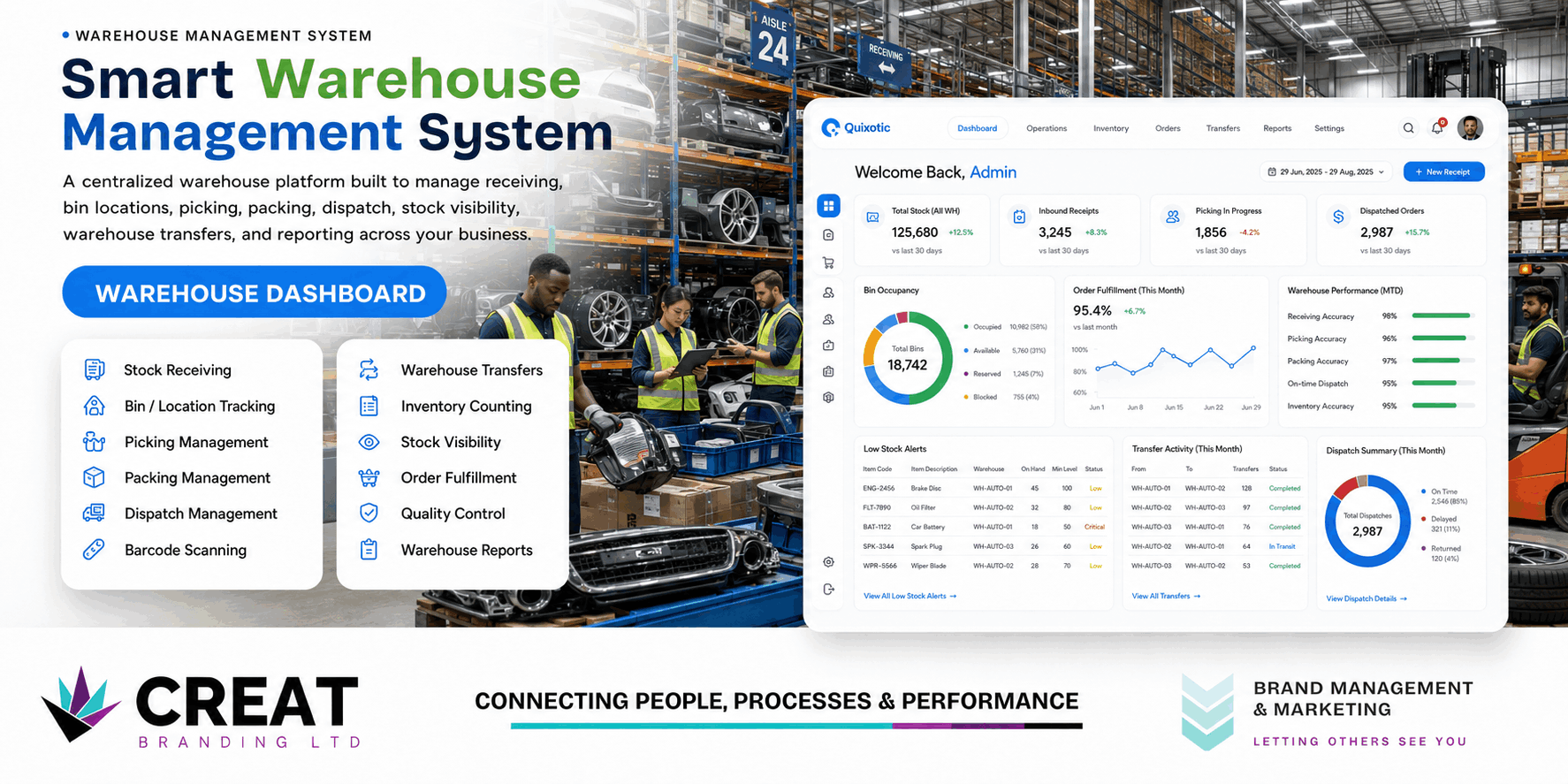
Warehouse Management System
Centralized warehouse operations control across single or multiple warehouse environmentsEnd-to-end goods receiving workflows including verification, quality checks, and GRN processingIntelligent bin and location-based storage management for precise stock positioning and retrievalStructured picking operations supporting order-based, batch, zone, and wave picking methodsPacking workflows covering packaging validation, labeling, and shipment readiness preparationDispatch management with delivery documentation, loading verification, and outbound trackingBarcode-driven operations for receiving, picking, packing, dispatching, and stock lookupInter-warehouse and branch stock transfers with approvals and in-transit visibilityPhysical inventory counting through cycle counts, full stock takes, and variance reconciliationReal-time stock movement tracking across all internal warehouse transactions and adjustmentsInventory control covering stock availability, reservations, allocations, and reorder thresholdsReturns processing for customer and supplier goods including inspection and restocking decisionsQuality control checkpoints for incoming goods verification and defect handlingEnd-to-end order fulfillment from order allocation to final dispatchWarehouse workforce management including task allocation, shifts, and productivity trackingEquipment tracking and utilization management for warehouse operational assetsAlert-driven operational monitoring for stock levels, delays, approvals, and exceptionsDocument management for all warehouse records including GRNs, picking slips, and dispatch notesWarehouse analytics and reporting for performance, stock accuracy, and operational efficiency3. Business ImpactImproved inventory accuracy through real-time tracking and structured stock control mechanismsFaster order fulfillment cycles driven by streamlined picking, packing, and dispatch workflowsReduced operational errors through barcode automation and standardized warehouse proceduresEnhanced visibility across multiple warehouses enabling better stock distribution and planningStronger operational efficiency through automation of receiving, movement, and fulfillment processesMinimized stock losses through improved counting, variance detection, and audit readinessOptimized warehouse space utilization via precise bin and location tracking systemsImproved customer satisfaction through faster and more accurate delivery executionGreater workforce productivity through structured task allocation and performance monitoringReduced equipment downtime through proper tracking and maintenance visibilityBetter compliance and traceability through complete documentation and audit trailsData-driven warehouse management supported by real-time reporting and performance analyticsIncreased scalability for growing businesses managing complex multi-location inventory networks
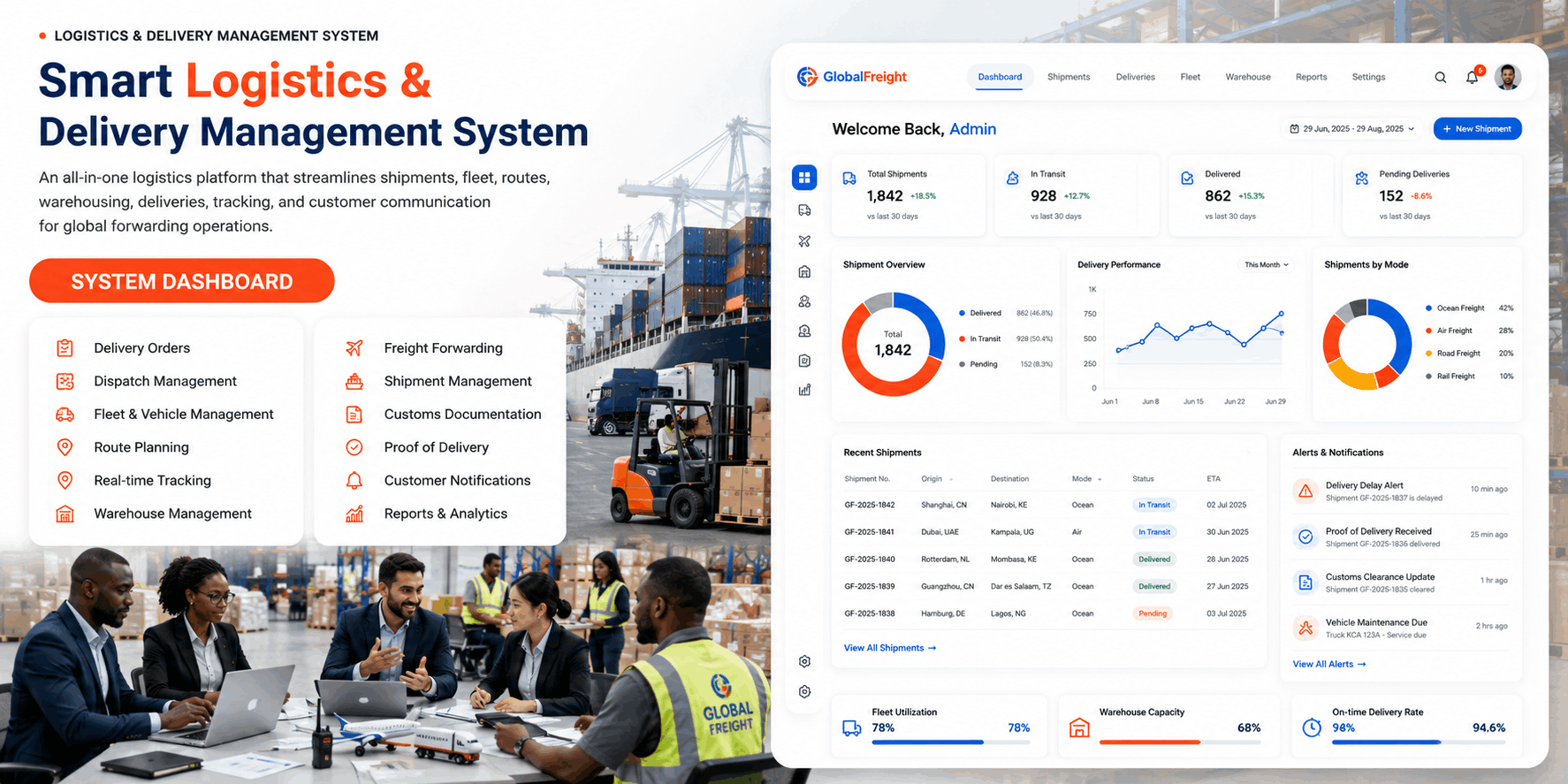
Logistics & Delivery Management
The proposed Logistics & Delivery Management module is structured to orchestrate end-to-end delivery operations within a unified digital ecosystem. It governs the full delivery lifecycle, starting from delivery order creation, dispatch coordination, driver and vehicle allocation, and intelligent route planning. It extends into real-time delivery tracking, customer communication, proof of delivery capture, and return handling processes.The system further integrates warehouse dispatch workflows, sales and invoicing synchronization, and mobile-first driver operations to ensure seamless field execution. It also manages delivery scheduling, cost computation, performance monitoring, reporting, and configurable logistics settings. Collectively, these capabilities enable a fully connected delivery network that links warehouse, fleet, drivers, and customers in a single operational flow.Business ImpactEnhanced operational efficiency through streamlined and automated delivery workflowsImproved delivery accuracy with reduced errors in dispatch, routing, and order fulfillmentReal-time visibility into fleet, driver activity, and delivery status for proactive decision-makingLower operational costs through optimized route planning, resource allocation, and fuel usageIncreased customer satisfaction through timely updates, tracking transparency, and reliable delivery executionStronger accountability via proof of delivery, audit trails, and driver performance monitoringImproved warehouse coordination with accurate stock deduction and dispatch synchronizationBetter financial control through integrated delivery cost calculation and profit visibilityReduced delivery failures and return rates through structured scheduling and monitoringScalable logistics operations supported by configurable rules, zones, and workflowsData-driven performance optimization enabled by comprehensive logistics reporting and analytics
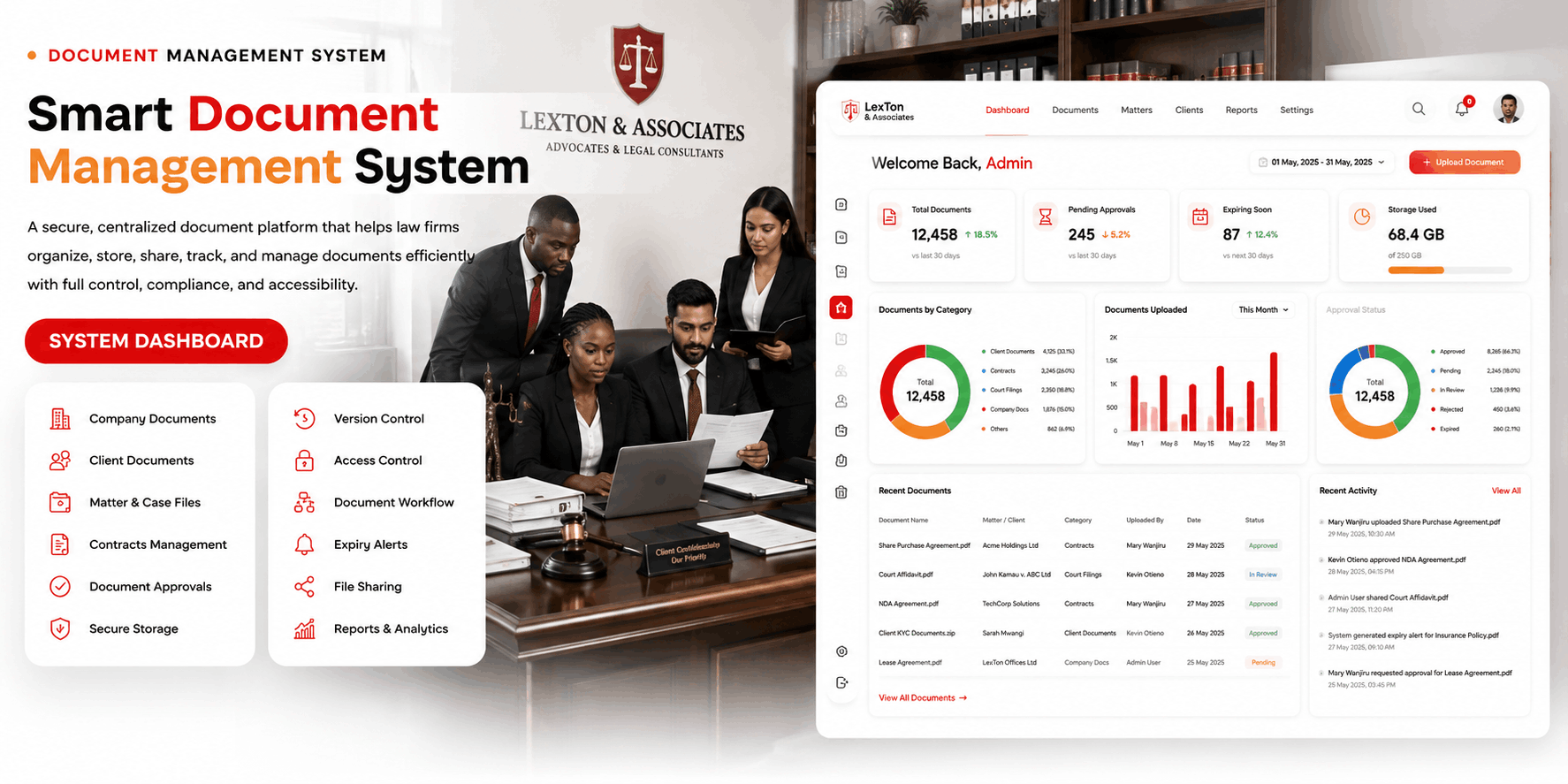
Document Management System
Centralized document lifecycle management from creation, upload, approval, sharing, archiving, and retrievalStructured handling of company records including legal, compliance, policy, and corporate governance documentsCustomer document management covering contracts, KYC files, invoices, agreements, and engagement recordsSupplier documentation workflows including onboarding files, contracts, compliance certificates, and procurement recordsProject documentation control including proposals, plans, reports, drawings, approvals, and completion filesContract lifecycle governance covering creation, approval, renewal tracking, amendments, and expiry monitoringApproval-driven document workflows for purchases, payments, budgets, HR, and operational decisionsSecure file sharing across internal teams, clients, and external stakeholders with controlled access permissionsAutomated expiry tracking and alerting for contracts, licenses, insurance, and compliance documentsSecure document storage with encryption, role-based access, backup, and audit loggingDocument upload, categorization, tagging, and indexing for structured organization and retrievalAdvanced search and filtering across departments, entities, dates, and document typesVersion control to track revisions, maintain history, and manage document changes over timeDocument workflow automation from submission through review, approval, and publicationStandardized templates for business documents to ensure consistency and efficiencyDocument reporting and analytics for visibility into usage, compliance, and activity trendsArchiving and retention management for inactive or historical recordsConfigurable system settings for file policies, workflows, security rules, and storage governanceBusiness ImpactEliminates document fragmentation by consolidating all files into a single structured digital repositoryImproves operational efficiency through faster document access, retrieval, and approval cyclesStrengthens compliance and governance through controlled access, audit trails, and version trackingReduces operational risk by minimizing document loss, duplication, and unauthorized modificationsEnhances collaboration through secure and trackable document sharing across stakeholdersImproves decision-making through real-time visibility into document workflows and statusAccelerates administrative processes through automation of approvals, workflows, and notificationsEnsures regulatory readiness with structured storage of legal, financial, and compliance recordsOptimizes storage management through archiving and lifecycle-based document retentionIncreases productivity by standardizing document creation using templates and workflowsStrengthens data security through encryption, access controls, and activity monitoringProvides scalable information management infrastructure aligned with organizational growth
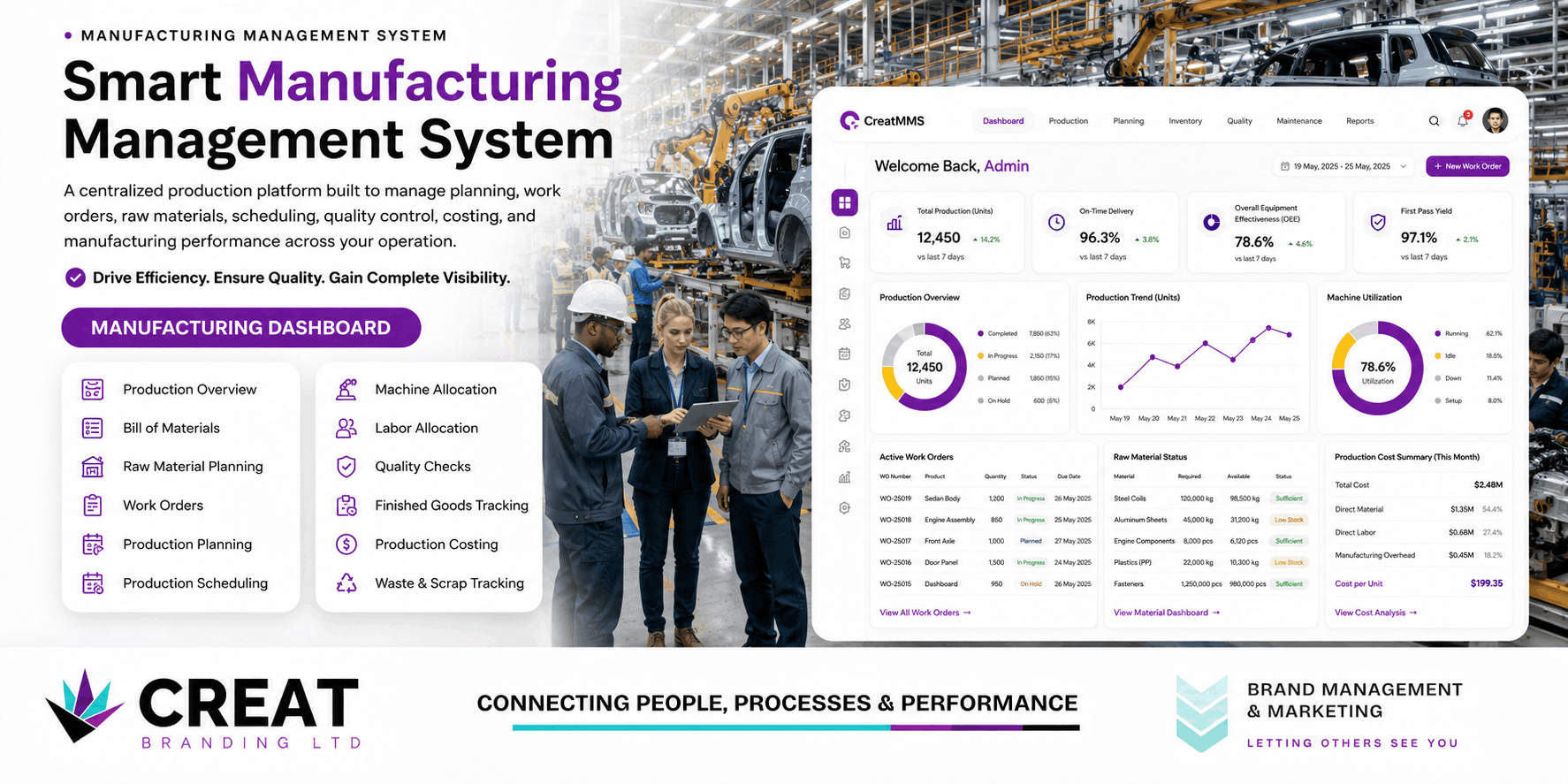
Manufacturing Management System
Raw material planning and consumption tracking across production cyclesBill of materials (BOM) configuration and management for product structuringWork order creation, execution, and production lifecycle controlProduction planning and scheduling for optimized factory outputMachine allocation and utilization monitoring across production linesLabor allocation and workforce coordination within manufacturing operationsQuality control inspections and defect tracking during production stagesFinished goods tracking from production completion to storage or dispatchProduction costing including materials, labor, and overhead allocationWaste and scrap management for efficiency and cost optimizationManufacturing performance reporting and operational analyticsBusiness ImpactIncreased production efficiency through structured and automated workflowsReduced material waste and improved resource utilization across operationsEnhanced cost control through accurate production costing and trackingImproved visibility into machine and labor performance for better planningHigher product quality through consistent quality control processesFaster production turnaround and improved on-time delivery of finished goodsStrengthened operational decision-making through real-time manufacturing insightsImproved scalability of manufacturing operations across growing demand cycles

Supply Chain Management System
Centralized supply chain visibility across procurement, inventory, logistics, and distribution operationsSupplier onboarding, coordination, communication tracking, and contract management workflowsProcurement planning and purchasing execution including approvals, quotations, and order trackingDemand forecasting and supply planning aligned with historical trends, sales patterns, and stock availabilityReal-time inventory and warehouse visibility across multiple locations, bins, and stock statesLogistics planning including transport allocation, routing, dispatch scheduling, and cost estimationShipment lifecycle management from creation, documentation, tracking, to final delivery confirmationOrder fulfillment processes linking customer orders to picking, packing, dispatch, and completionDistribution planning across regions, branches, and customer delivery networksWarehouse operations management covering receiving, storage, picking, packing, and dispatch flowVendor performance monitoring based on delivery timelines, quality, pricing, and reliability metricsQuality control workflows ensuring inspection, compliance, and rejection handling standardsReturns management across customer returns, supplier returns, and replacement or refund processesSupply chain cost tracking including logistics, procurement, warehouse, and transport expensesRisk and compliance monitoring across suppliers, transport, contracts, and regulatory requirementsReporting and analytics for end-to-end supply chain performance visibilityAlerting system for real-time operational disruptions and decision triggersConfigurable supply chain settings for workflows, approvals, zones, and operational rulesBusiness ImpactEnd-to-end operational visibility across the entire supply chain ecosystemReduced supply disruptions through proactive demand and inventory planningLower logistics and procurement costs through optimized routing and purchasing decisionsFaster order fulfillment and improved delivery performance across all channelsStronger supplier accountability through structured performance measurement systemsImproved inventory accuracy with real-time stock tracking and movement controlEnhanced customer satisfaction through reliable and timely deliveriesIncreased operational efficiency through automation of logistics and warehouse workflowsBetter risk mitigation and compliance adherence across supply chain operationsData-driven decision-making powered by real-time analytics and reporting dashboardsImproved coordination between procurement, warehouse, logistics, and distribution functionsScalable supply chain infrastructure capable of supporting business growth and expansion
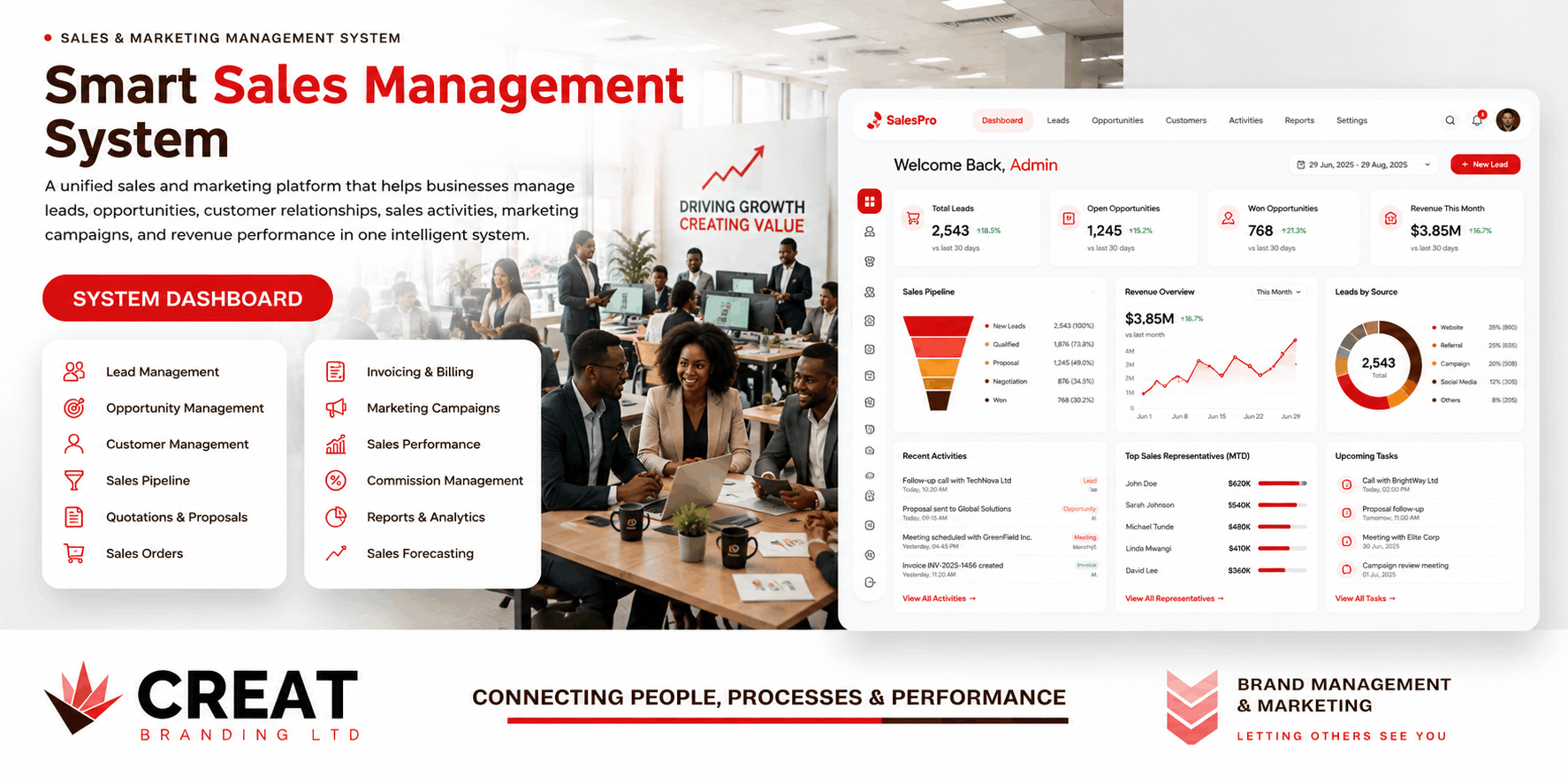
Payroll Management System
Centralized payroll processing from salary computation through to final payment executionEmployee salary structuring including basic pay setup, job grading, salary history, and adjustmentsAutomated salary calculation covering gross pay, net pay, arrears, overtime, bonuses, and incentivesManagement of employee benefits and compensation components such as allowances and performance rewardsStructured deduction handling including loans, advances, statutory contributions, insurance, and penaltiesCompliance automation for PAYE, NSSF, NHIF/SHA, and other statutory payroll obligationsAttendance and leave integration to ensure accurate salary computation based on workforce activityPayroll approval workflows with multi-level authorization and audit trackingPayslip generation and distribution through digital formats and employee communication channelsBank payment file preparation for seamless salary disbursement through financial institutionsPayroll reporting and analytics for cost visibility, variance tracking, and financial oversightAccounting integration to align payroll data with general ledger and financial reporting systemsEmployee self-service functionality for payslip access, requests, and personal payroll updatesPayroll configuration and governance covering rules, structures, templates, and access controlsBusiness ImpactImproved payroll accuracy through automated calculations and reduced manual interventionFaster payroll cycles enabling timely and consistent employee paymentsStronger statutory compliance with reduced risk of penalties and reporting errorsEnhanced financial control through transparent payroll costing and reporting visibilityReduced administrative workload for HR and finance teams through automation and self-service toolsImproved employee satisfaction through timely payments and easy access to payroll informationBetter cost management through visibility into allowances, deductions, and workforce expensesStrengthened governance through structured approvals, audit trails, and access controlsSeamless integration with accounting systems for cleaner financial reconciliationData-driven payroll decision-making supported by real-time reports and analyticsReduced operational risk through standardized payroll processes and compliance enforcementScalable payroll infrastructure capable of supporting organizational growth and complexity

Project Management System
Project initiation and structured setup including scope definition, ownership assignment, and configuration of workflowsReal-time project monitoring through dashboards covering progress, KPIs, timelines, budgets, and performance indicatorsTask decomposition and execution management with assignments, dependencies, tracking, and completion workflowsMilestone tracking to control key delivery checkpoints and ensure adherence to timelinesSchedule and timeline management using calendars, Gantt views, and deadline tracking mechanismsTeam and resource allocation including workload balancing, role assignment, and utilization trackingBudget planning, approval, and monitoring to ensure financial discipline across all project phasesExpense capture and cost tracking with categorization, approvals, and reportingTime tracking and timesheet management for accurate productivity measurement and billing accuracyCentralized document management for project files, contracts, briefs, and version-controlled assetsProgress reporting and analytics for internal and client-facing project visibilityClient approval workflows covering deliverables, budgets, milestones, and change requestsBilling and invoicing based on milestones, tasks, time, or project completion stagesCollaboration tools enabling communication, file sharing, and structured team/client interactionsRisk identification and mitigation management to support proactive project controlChange request handling to manage scope, cost, and timeline adjustments with approval governanceResource planning and allocation for people, equipment, and materialsProject templates to standardize and accelerate project setup and executionReporting and analytics for performance, profitability, and operational insightsSystem configuration and governance including roles, permissions, workflows, and integrationsBusiness ImpactEnhanced project delivery efficiency through structured workflows and centralized execution controlImproved accountability across teams through clear task ownership and milestone trackingStronger financial control with accurate budgeting, expense tracking, and profitability analysisFaster project execution due to standardized templates and automated processesImproved client satisfaction through transparent communication and structured approval flowsReduced project delays and risks through proactive monitoring and risk management toolsIncreased revenue realization through accurate billing and streamlined invoicing processesBetter resource utilization and reduced operational waste across teams and assetsData-driven decision-making supported by real-time analytics and performance dashboardsImproved collaboration between internal teams and clients through integrated communication toolsStronger governance, compliance, and change control reducing scope creep and inefficienciesScalable project operations enabling organizations to manage multiple complex projects simultaneously

Human Resource Management System
Centralized workforce administration covering full employee lifecycle management from recruitment to exitStructured organizational management through departments, job positions, and reporting hierarchiesAttendance and workforce tracking including clock-in/out, shifts, overtime, and absence monitoringLeave management workflows with automated requests, approvals, and balance trackingPayroll-linked HR data processing to support accurate salary computation and statutory complianceRecruitment and talent acquisition management from job posting to onboarding of new employeesEmployee onboarding processes including documentation, orientation, and role assignmentPerformance management through KPI tracking, appraisals, and structured employee evaluationsTraining and development tracking for skills growth, certifications, and learning programsSecure employee document management for contracts, IDs, and compliance recordsEmployee self-service capabilities for HR requests, leave applications, and personal data accessShift and schedule planning for optimized workforce allocation across operationsHR approval workflows for structured authorization of key employee-related actionsDisciplinary and compliance management for incident tracking and resolution processesEmployee exit and offboarding management including clearance and asset recoveryCompensation and benefits administration including salary structures and incentivesAsset assignment tracking for equipment issued to employeesHR reporting and analytics for workforce insights and compliance monitoringSystem configuration for HR policies, roles, workflows, and operational rulesBusiness ImpactStreamlined HR operations through end-to-end digitization of workforce processesImproved employee data accuracy and centralized visibility across the organizationFaster recruitment cycles and more efficient talent acquisition workflowsEnhanced workforce productivity through structured attendance, shift, and leave managementReduced payroll discrepancies through integrated HR and payroll data synchronizationStronger employee engagement via self-service access and transparent HR processesImproved compliance through automated document handling and audit-ready recordsBetter performance management supported by data-driven evaluations and KPIsReduced administrative overhead through automation of repetitive HR tasksStronger governance and accountability via structured approval workflowsImproved asset control and reduced organizational losses through tracking systemsData-driven HR decision-making enabled by real-time dashboards and analyticsScalable HR framework that supports organizational growth and workforce expansion
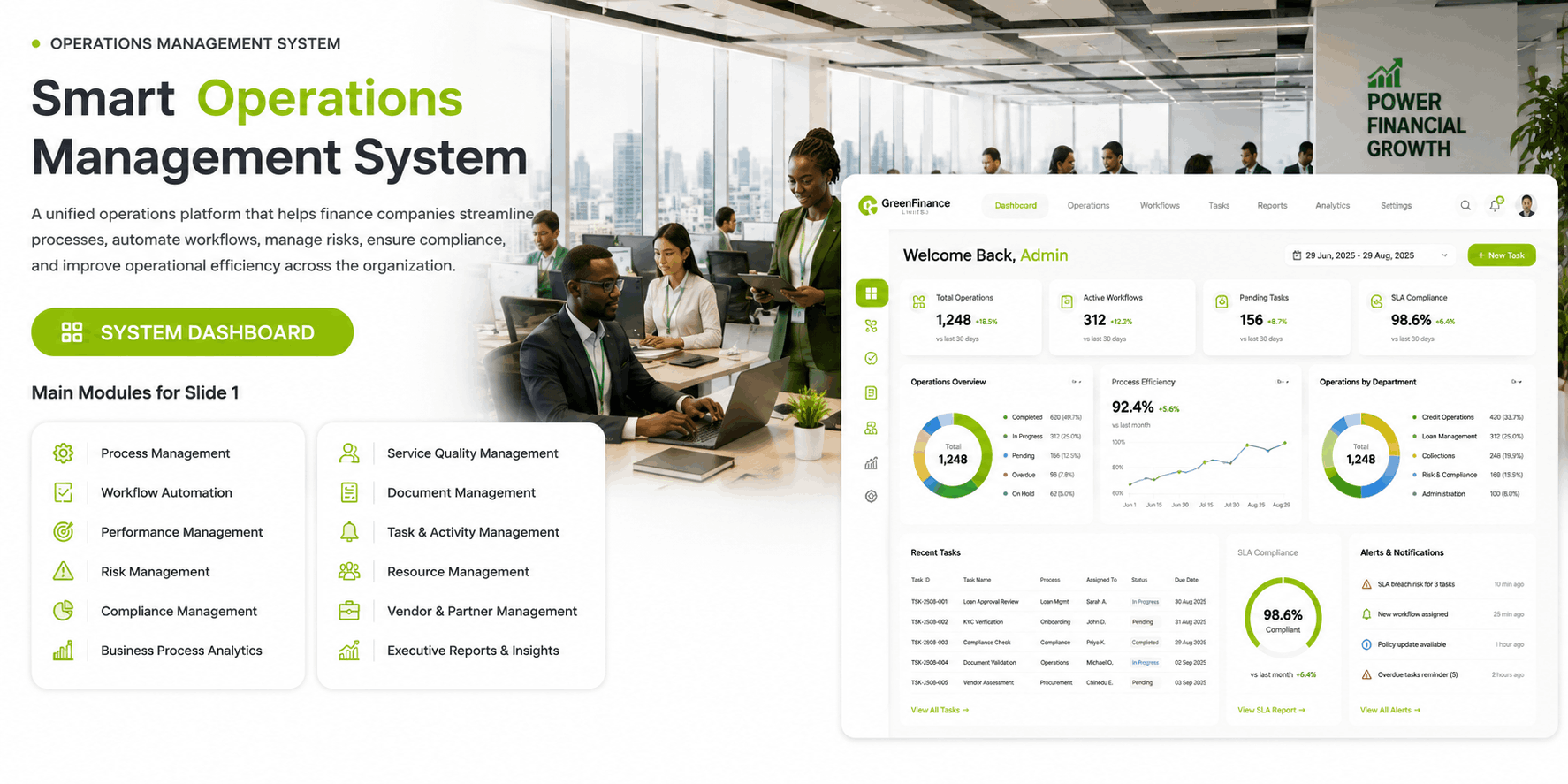
Operations Management System
Centralized operations oversight through real-time dashboards covering tasks, workflows, approvals, and departmental performanceDaily task execution management including assignment, prioritization, tracking, and completion monitoringDepartmental workflow orchestration to streamline how work moves across teams and approval stagesInternal request handling for services, materials, equipment, transport, and operational support needsStructured multi-level approval management across departments, finance, procurement, and operationsJob card lifecycle management from creation through execution, costing, and completion trackingWork scheduling for staff, shifts, maintenance activities, and operational planning calendarsResource allocation covering staff, equipment, vehicles, materials, and operational budgetsWork order management for structured execution of operational activities with supervision and costing controlMaintenance and asset management including preventive maintenance and repair trackingIncident and issue management for reporting, escalation, and resolution of operational disruptionsProductivity and performance tracking across staff, departments, and operational outputsOperational reporting and analytics for daily, weekly, and executive decision supportCommunication and notification workflows for real-time operational coordination and alertsDocument and file management for operational records, manuals, approvals, and attachmentsQuality control workflows to ensure standards compliance before task or job completionCost and budget tracking across tasks, departments, and operational activitiesMulti-branch and departmental operations management for scalable organizational controlSystem configuration settings to define workflows, templates, permissions, and operational rulesBusiness ImpactImproved operational efficiency through centralized coordination of all daily business activitiesEnhanced visibility and control over tasks, resources, workflows, and departmental performanceReduced operational delays through structured workflows and automated approval processesStronger accountability across teams through task tracking, job cards, and performance monitoringOptimized resource utilization with better allocation of staff, equipment, and budgetsFaster issue resolution and reduced downtime through structured incident and maintenance managementImproved service quality through integrated quality control and supervision checkpointsBetter cost control and financial discipline through real-time operational budgeting and trackingIncreased productivity through performance monitoring and workload optimizationEnhanced communication and coordination across departments and branchesScalable operational structure supporting multi-branch and growing organizationsData-driven decision-making powered by real-time operational reporting and analytics
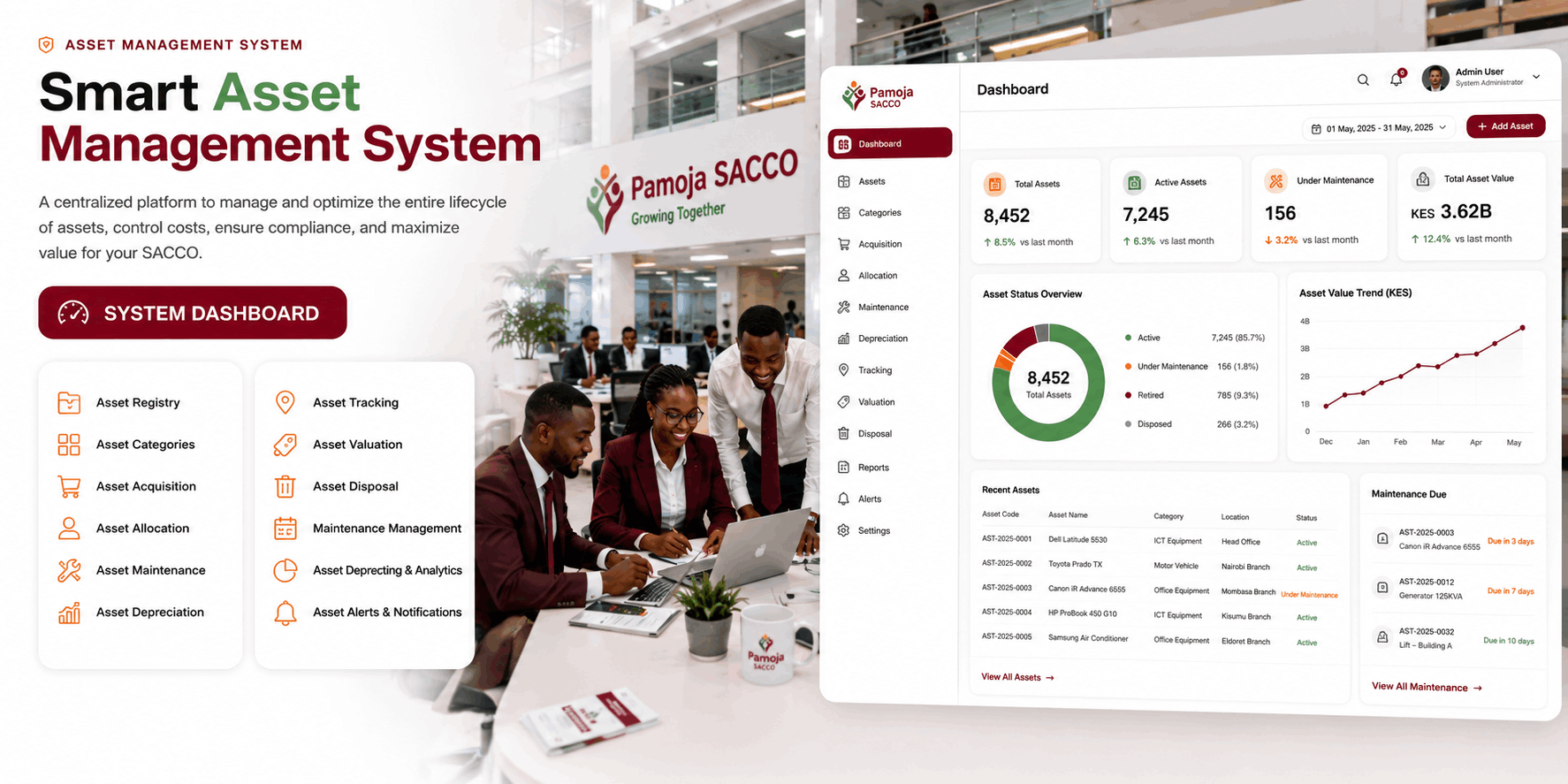
Asset Management System
Centralized asset registration and fixed asset lifecycle management from acquisition to disposalReal-time asset visibility through dashboards covering value, location, condition, and utilization statusStructured asset categorization to support standardized reporting and depreciation modelingAsset allocation and custody tracking across employees, departments, branches, and projectsAutomated depreciation processing with configurable accounting methods and financial integrationPreventive and corrective maintenance management to ensure asset performance and longevityControlled asset disposal workflows including sale, scrapping, donation, and loss handlingAsset valuation tracking for purchase, market, replacement, and net book value analysisEnd-to-end asset movement tracking including transfers, check-in/check-out, and audit trailsInsurance and warranty management for risk coverage, claims tracking, and renewal controlCentralized document management for all asset-related records and compliance filesPhysical asset auditing and verification to reconcile system records with real-world assetsStructured approval workflows governing acquisitions, transfers, maintenance, and disposalsConfigurable system settings to define asset rules, workflows, and governance structuresBusiness ImpactImproved asset visibility enabling real-time control and informed decision-makingReduced asset loss and misplacement through strict tracking and accountability systemsEnhanced financial accuracy through automated depreciation and valuation managementIncreased operational efficiency by automating maintenance and asset lifecycle processesStronger compliance and audit readiness through structured records and verification processesLower operational costs through optimized maintenance and improved warranty utilizationBetter governance through controlled approvals and role-based asset managementImproved risk management via insurance tracking and asset protection mechanismsHigher organizational productivity through efficient asset allocation and utilizationStronger financial planning supported by accurate asset valuation and reporting insightsReduced fraud and unauthorized asset movement through traceable workflowsScalable asset control framework adaptable to growing and multi-location organizations
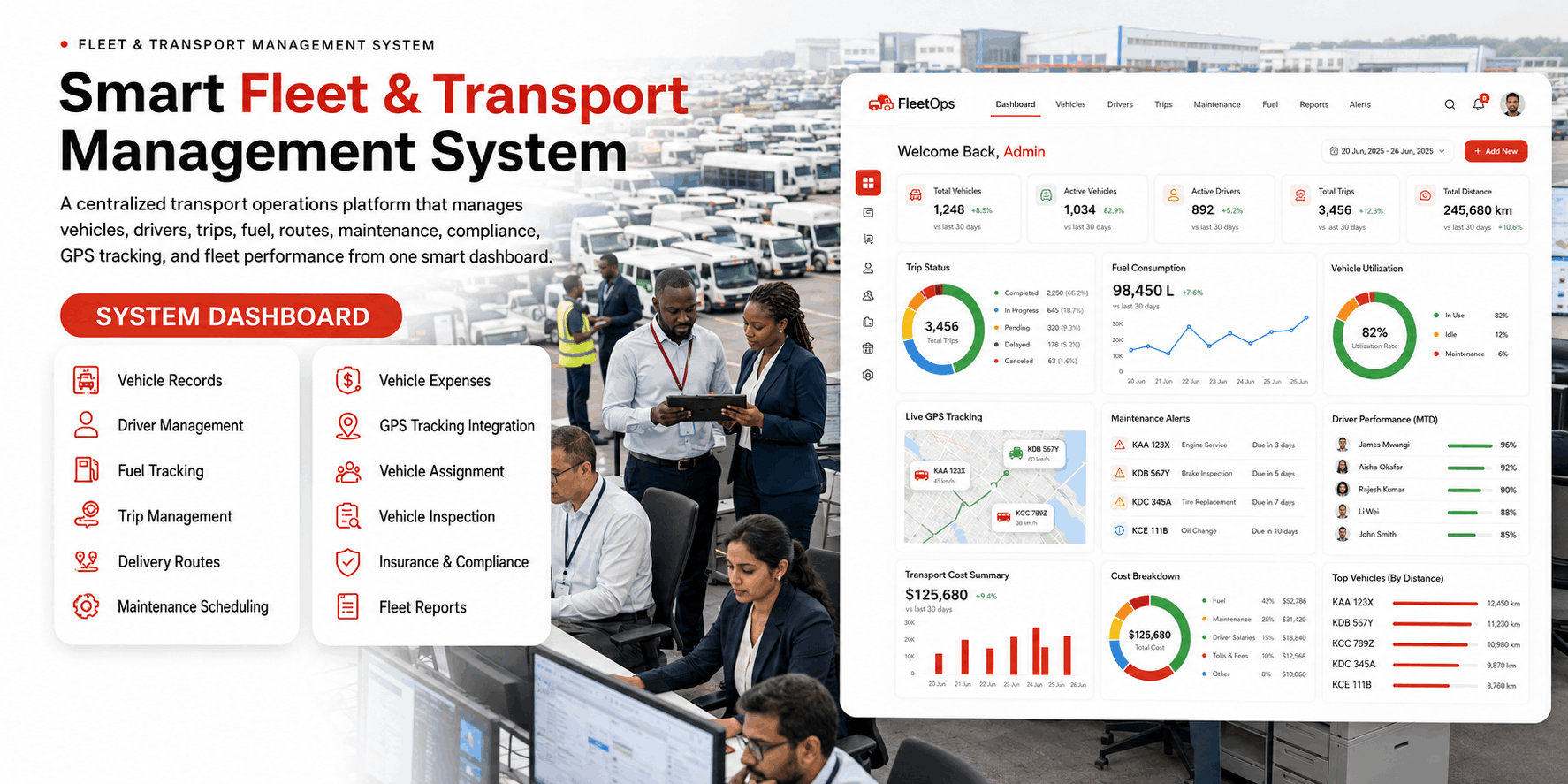
Fleet & Transport Management Module
Centralized fleet visibility through real-time dashboards covering vehicles, drivers, fuel usage, trips, maintenance status, and operational costsComprehensive vehicle lifecycle management including registration, documentation, assignment history, and compliance recordsDriver management covering profiling, licensing, performance tracking, attendance, and operational accountabilityFuel monitoring and control with detailed tracking of consumption, costs, efficiency, and fraud detection mechanismsTrip planning and execution including approvals, scheduling, routing, cost estimation, and completion trackingRoute optimization and delivery coordination to improve efficiency, reduce travel time, and enhance service deliveryPreventive and corrective maintenance scheduling to manage servicing, repairs, breakdowns, and workshop coordinationVehicle expense tracking covering fuel, repairs, insurance, tolls, and operational costs per trip and vehicleGPS-based tracking for real-time location monitoring, geofencing, route history, and driver behavior analysisVehicle assignment and custody control across drivers, departments, branches, and projects with full audit historyInspection and roadworthiness checks through pre-trip and post-trip evaluations with safety compliance validationInsurance and regulatory compliance management with expiry alerts, renewals, and documentation controlAccident and incident reporting with structured claims handling, investigation, and resolution trackingTyre lifecycle tracking covering usage, rotation, replacement, and performance monitoringFleet analytics and reporting providing insights into utilization, costs, efficiency, and operational performance3. Business ImpactImproved fleet visibility and operational control through real-time monitoring and centralized data accessReduced fuel leakage, misuse, and inefficiencies through structured tracking and accountability mechanismsLower transport and maintenance costs driven by preventive maintenance and optimized resource utilizationEnhanced delivery performance through smarter routing, scheduling, and trip coordinationIncreased driver accountability and safer operations supported by performance tracking and compliance checksImproved asset utilization and reduced vehicle downtime through proactive maintenance planningStrengthened regulatory compliance with automated alerts and document lifecycle managementFaster and more accurate incident response and insurance claim processingEnhanced security and reduced unauthorized vehicle usage through GPS tracking and geofencingData-driven fleet optimization enabled by advanced analytics and performance reportingImproved profitability through better cost control per vehicle, trip, and driverScalable transport operations supported by structured, technology-driven fleet management workflows
Customer Support System
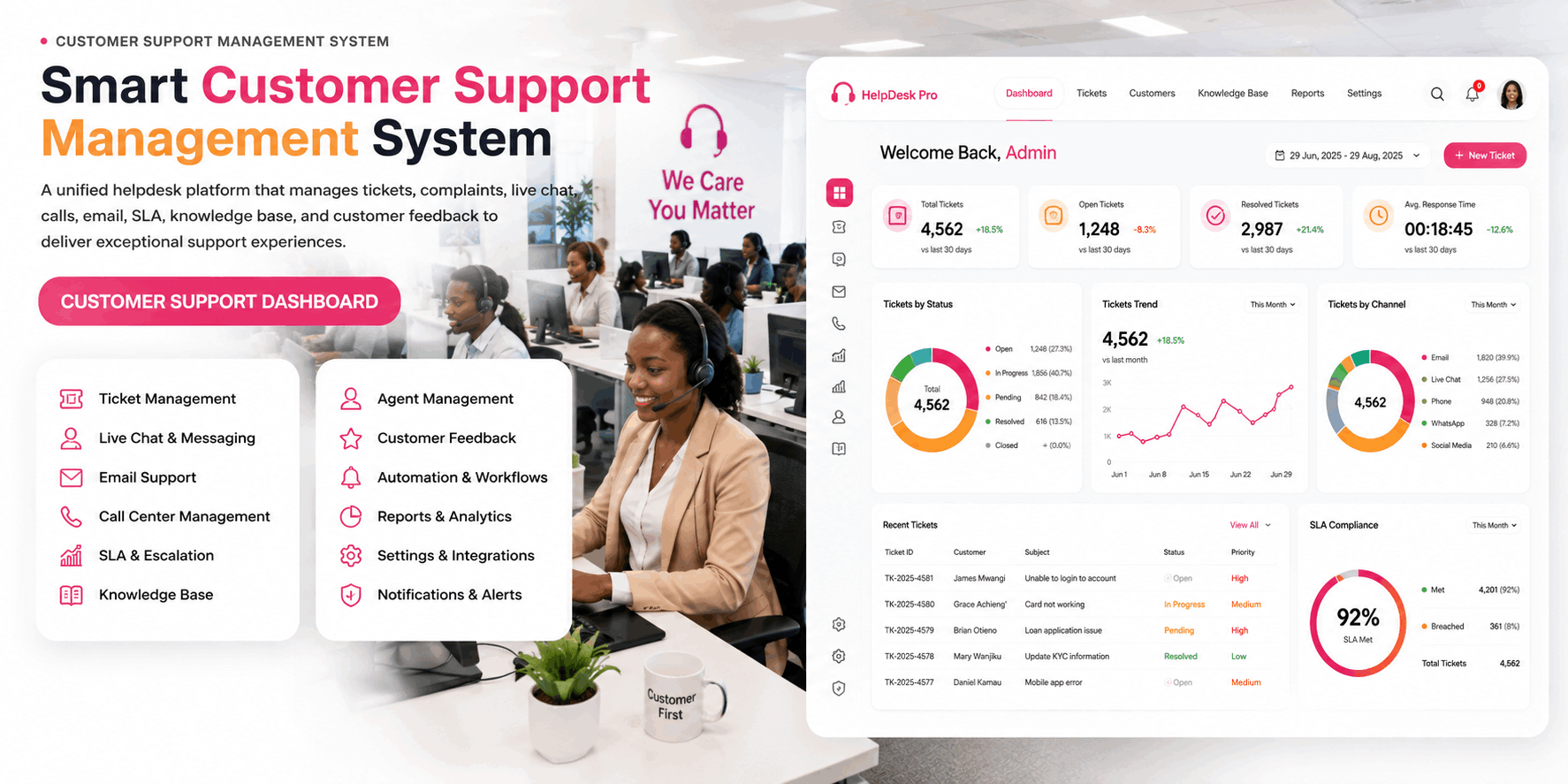
The proposed Customer Support / Helpdesk System is designed to centralize and streamline end-to-end customer service operations within a single intelligent platform. It enables structured management of support tickets from creation through to resolution, including complaint handling, issue categorization, priority classification, assignment workflows, and escalation pathways.The system integrates multiple communication channels such as email, live chat, phone, SMS, and social media into a unified support interface, ensuring all customer interactions are captured and tracked.It further supports real-time monitoring of service levels through SLA tracking, response time analytics, and resolution performance metrics. A built-in knowledge base enables self-service support, while automation capabilities handle ticket routing, notifications, and workflow triggers.The platform also manages customer profiles, agent performance tracking, departmental routing, feedback collection, document handling, audit trails, integrations with other business systems, and configurable helpdesk settings to ensure a fully adaptable support environment.Business ImpactThe solution is positioned to transform customer service delivery by shifting organizations from reactive, fragmented support processes to a proactive, data-driven service model. Businesses benefit from significantly faster response and resolution times, improved ticket visibility, and stronger accountability across support teams.Operational efficiency is enhanced through automation of repetitive tasks such as ticket assignment, prioritization, escalation, and notifications, reducing manual workload and human error. Customer satisfaction improves through consistent service delivery, omnichannel communication, and faster issue resolution backed by SLA enforcement.Organizations gain deeper insights into service performance through real-time dashboards and analytics, enabling continuous improvement in agent productivity, service quality, and customer experience. Overall, the platform strengthens customer retention, enhances brand trust, reduces operational costs, and establishes a scalable, enterprise-grade support ecosystem.